
Our Stories
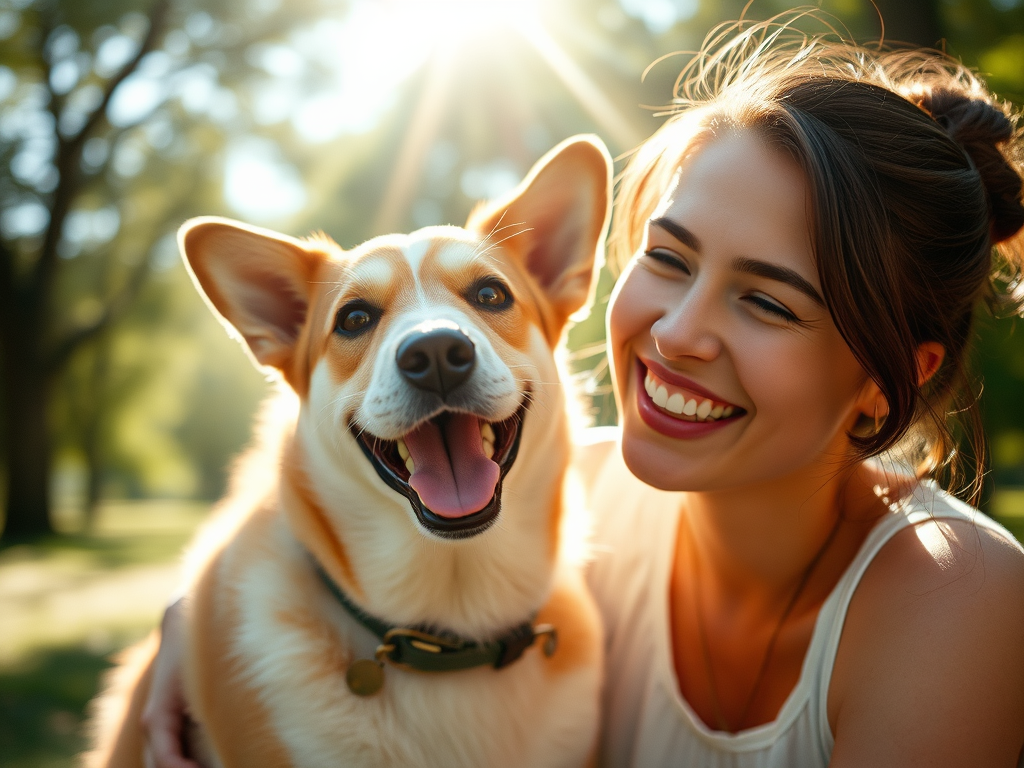
Welcome to a realm of limitless pawrenting possibilities. Each journey with your furry friend is as exhilarating as the destination. Every shared moment provides a chance to leave your unique paw print on the canvas of existence. You can craft stories filled with joy, laughter, and love. The only limit in this adventure is the extent of your imagination.
From the blog



Latest Posts
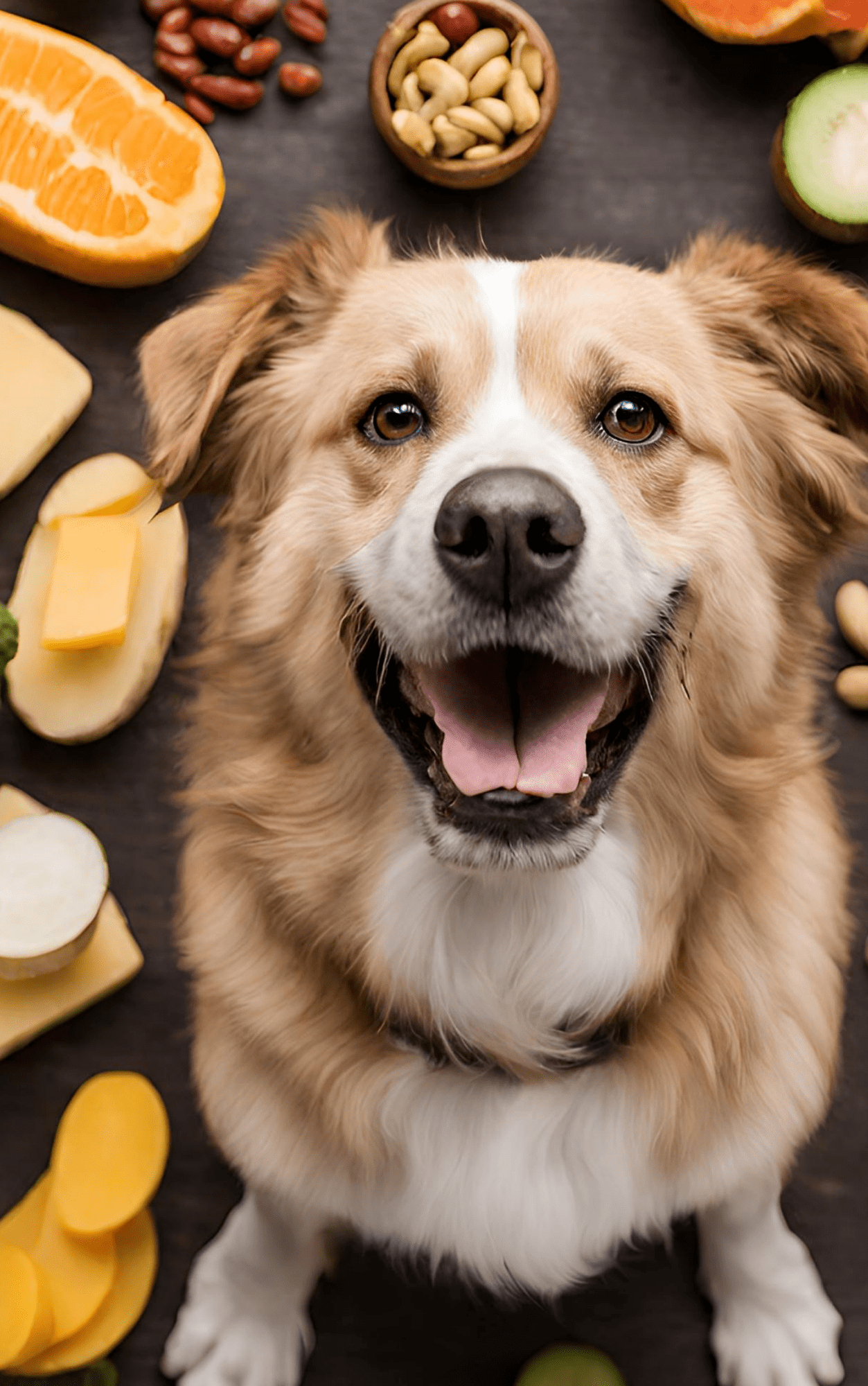
Welcome to a world of Pawrenting, where the thrills of shared experiences ignite joy and laughter. The journey is filled with adventures, as exhilarating as the destination, with each day bringing new opportunities for exploration. Start with early morning walks in the park. Then enjoy cozy afternoons spent cuddling on the couch. Every moment is a chance to connect with your furball. You can make memories that could last for a lifetime! As you navigate the ups and downs of pet parenthood, you’ll discover the unique bond that forms through play. Training and quiet times together further strengthen this bond. These experiences create a tapestry of unforgettable moments. They enrich both your lives.
-
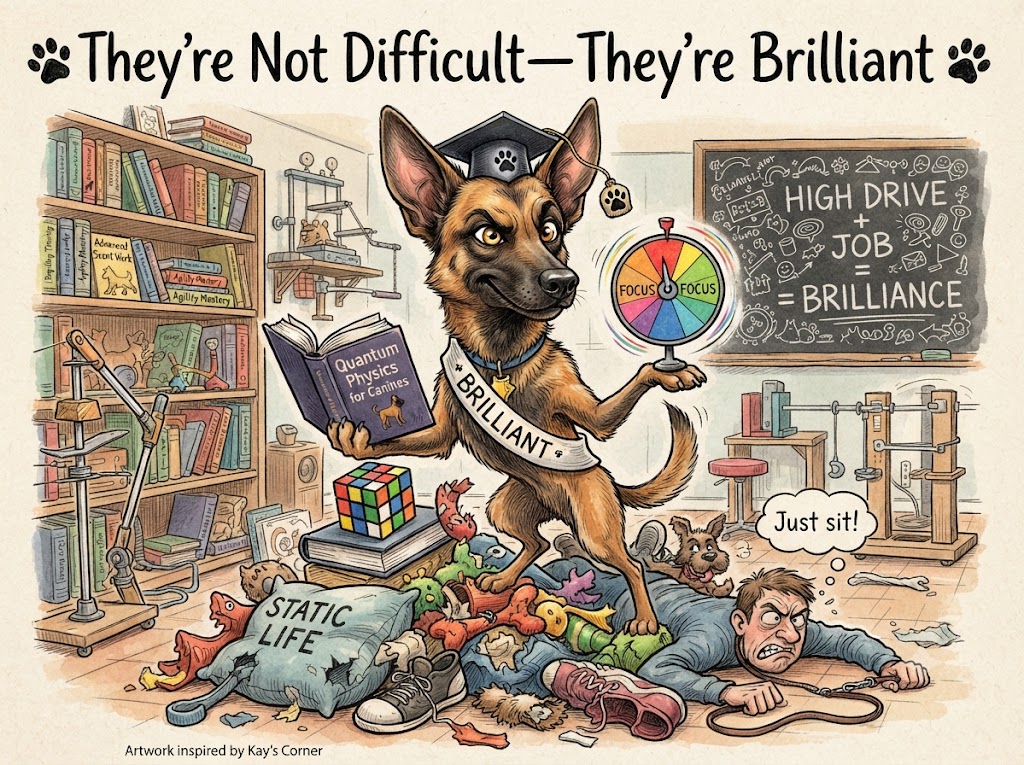
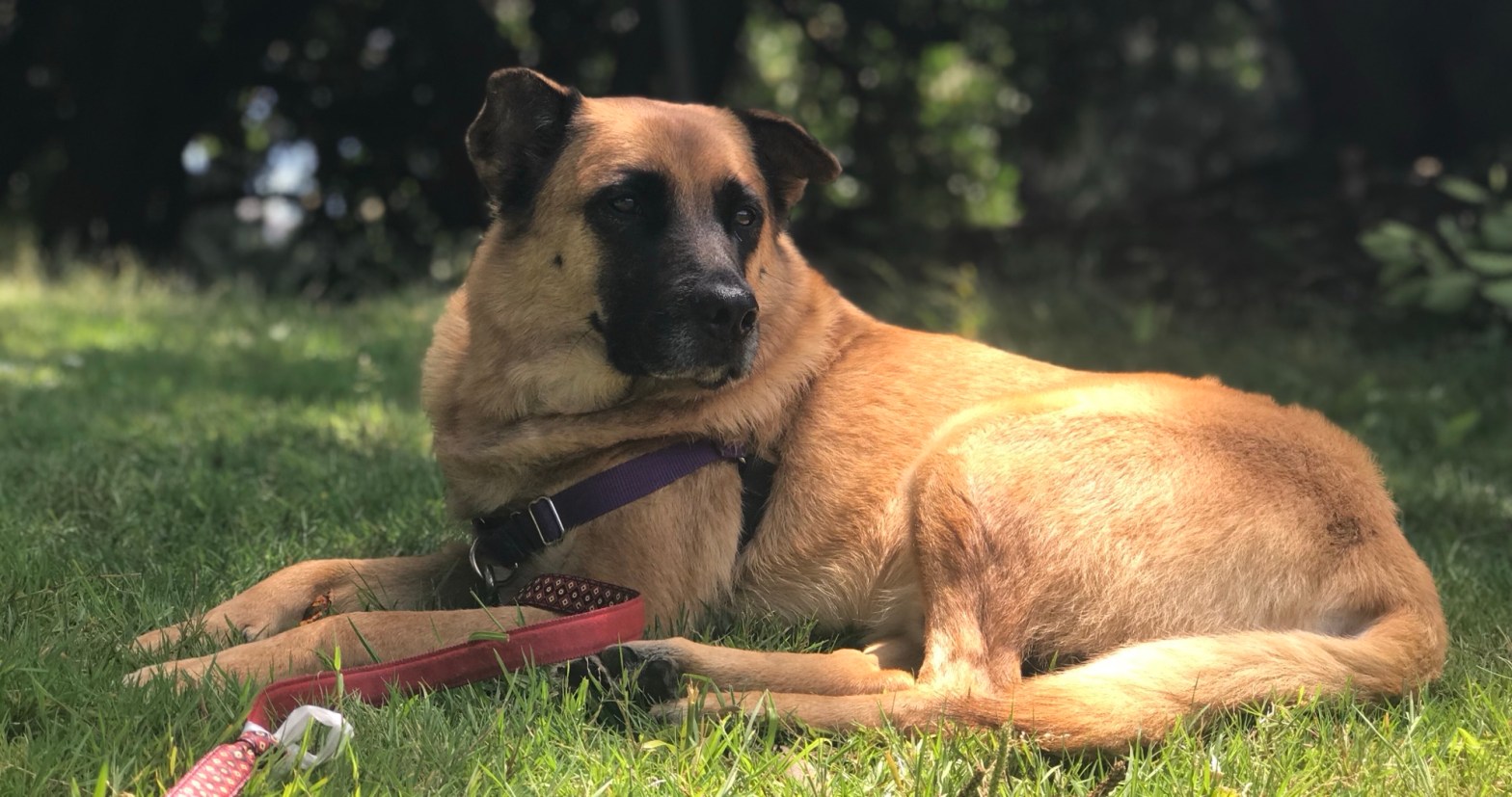
The Belgian Malinois is often the most misunderstood dog in the modern canine world. To the casual observer or a prospective owner unprepared for the breed’s intensity, the Malinois appears “difficult”—demanding, relentless, and occasionally overwhelming. They are frequently mislabeled as “hyperactive” or “aggressive” by those who measure dog behavior through the lens of a passive family pet. However, this assessment is not just reductive; it is fundamentally flawed. To call a Belgian Malinois “difficult” is to mistake brilliance for inconvenience. They are not difficult; they are, in every sense of the word, brilliant.
The “difficulty” associated with the Malinois is a direct byproduct of their singular evolutionary purpose: work. Developed in Belgium as an all-around herding dog, the Malinois was never bred to spend sixteen hours a day lounging on a sofa. They were bred to partner with humans in complex tasks, requiring immediate responsiveness, high environmental awareness, and a drive to exert control over their surroundings. When a Malinois is placed in a static, low-stimulation environment without a “job,” their legendary intelligence—which should be channeled into problem-solving and task mastery—naturally turns inward, manifesting as destructive behavior, obsessive habits, or excessive vocalization. This is not a flaw in the dog; it is a mismatch of expectations.
When we look at the Malinois through the correct lens, what we see is a breathtaking level of cognition. A Malinois does not just “learn” a command; they analyze the context. They are arguably the most sensitive breed to human body language and intent, which is precisely why they excel in military, police, and search-and-rescue roles across the globe. Their ability to process information at high speeds allows them to navigate complex, changing environments that would leave other breeds confused or overstimulated. To a Malinois, the world is a series of puzzles to be solved, and they are always searching for the next piece of the riddle.
Their high drive—often the primary complaint of the “difficult” label—is actually a superpower of focus. A Malinois in “work mode” displays a level of concentration that is almost human-like in its intensity. They possess a deep-seated desire to cooperate with their handler, a trait that creates the potential for a bond that is arguably closer than any other pairing in the animal kingdom. When they are properly trained, they are not robotically obedient; they are actively participating in a shared endeavor. They are collaborative athletes, not just pets.
The mistake many owners make is attempting to “tame” the Malinois rather than partnering with them. A Malinois cannot be forced into a mold of passive obedience; they must be managed through structured engagement. Brilliant dogs require a brilliant handler—someone who understands that mental exercise is far more exhausting and fulfilling than physical exercise alone. Training a Malinois requires a mastery of timing, a deep understanding of motivation, and an appreciation for their unique psychology. It is an education for the owner as much as it is for the dog.
When you provide a Malinois with an outlet for their brilliance—be it agility, scent work, obedience training, or protection sports—the “difficult” dog disappears. In their place emerges a creature of immense capability and loyalty. They become a partner who anticipates your moves, supports your goals, and brings a level of enthusiasm to your life that is unmatched. They do not just live alongside you; they live for you.
The label of “difficult” is an indictment of our own limitations as owners, not a statement on their nature. If we treat a Ferrari like a family sedan, we shouldn’t be surprised when the engine burns out. The Belgian Malinois is an elite athlete, a high-performance machine of nature, and a testament to the power of human-canine partnership. They do not ask for an easy life; they ask for a meaningful one. If you can provide that, you will find that you haven’t just adopted a dog—you have gained a brilliant companion who will challenge you, push you, and ultimately change the way you see the world.
-
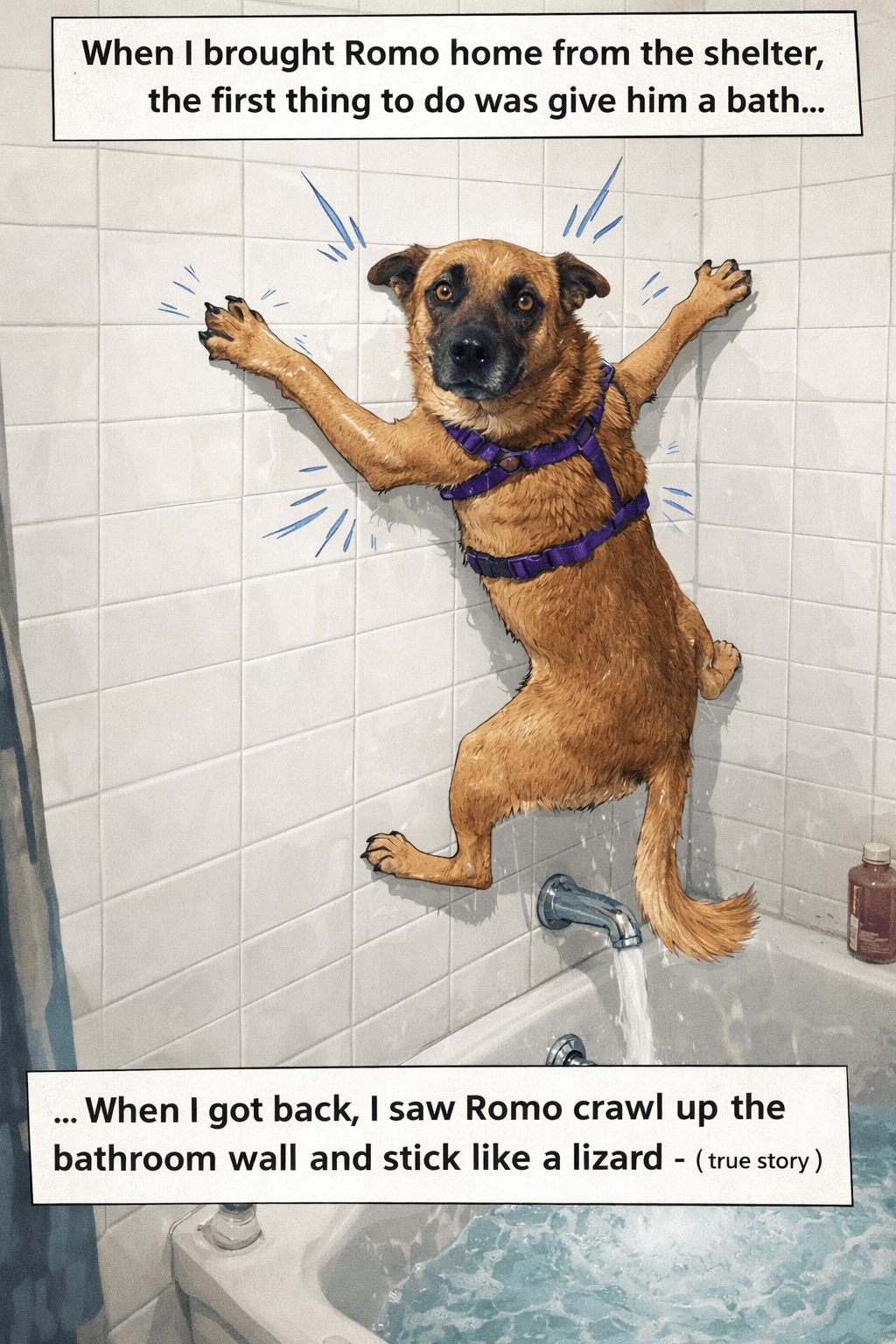
The bathroom, for most dogs, is an unremarkable tile-lined room. It is a place of cold surfaces, echoing acoustics, and the occasional forbidden sip from the toilet bowl. But for Sauli, my Belgian Malinois, the bathroom was not a room; it was a theater of war. It was the place where the dignity of the rescue pup was stripped away, replaced by the indignity of warm water, lavender-scented shampoo, and a towel that felt suspiciously like a cage.
The tension began long before the actual bathwater started to run. It began with the sound. The click of the bathroom door handle was all it took. In any other circumstance, Sauli was a paragon of obedience, or at least a very good listener. But the moment the porcelain tub began to fill, she became a phantom. She didn’t growl, and she didn’t bark; she simply evaporated. She would melt into the shadows of the hallway, ears pinned back, her intelligent eyes tracking my every movement with the intensity of a predator watching a rival.
“Sauli,” I would call, my voice feigning a casualness I definitely did not feel. “Come here, sweet girl.”
The silence that followed was heavy. It was the silence of a dog who knew exactly what was coming. When I finally found her, she was usually wedged in the farthest corner of the apartment, behind a bookshelf, looking like a statue of regret. Extracting her was a chore of negotiation. I had to offer treats, sweet talk, and eventually, a gentle, coaxing guide. She walked toward the bathroom as if she were marching toward the gallows, her paws dragging against the hardwood floor with a rhythmic scritch-scratch of protest.
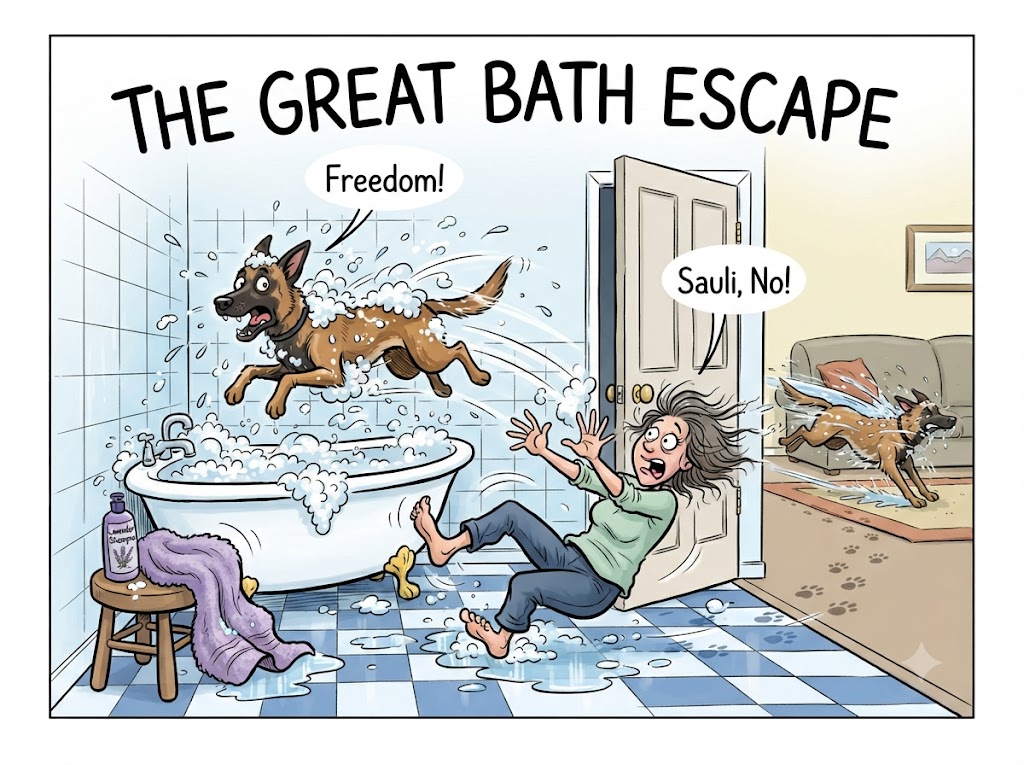
Once inside the bathroom, the door was firmly shut. This was her first clue: the “Great Bath Escape” had commenced.
For a Belgian Malinois, intelligence is a double-edged sword. She understood the geometry of the room. She knew the distance between the sink and the door. She knew exactly how much force was required to nudge the handle. While I scrambled to gather the shampoo and the towel, Sauli was conducting a tactical assessment. She didn’t struggle when I lifted her into the tub; she went limp. This was her “passive resistance” phase. She would stand there, perfectly still, looking at the ceiling with an expression of stoic martyrdom, waiting for a single lapse in my concentration.
The water poured, and the shampoo lathered. That was the moment of explosion.
It wasn’t a slow crawl. It was a physics-defying launch. One moment, she was a wet, soapy dog in the tub; the next, she was a blur of black fur, a projectile launched into the middle of the room. The sheer velocity with which a Malinois can exit a confined space is truly something to behold. She hit the floor, her paws finding traction on the slick tiles with a frantic scramble, and she was off.
The escape was not just a run; it was a full-scale tactical maneuver. She banked off the toilet, dodged my grasping hands, and threw herself toward the door. I lunged, but I was hindered by my own soapy hands. I felt like a cartoon character slipping on a banana peel, my feet sliding across the wet tiles while she darted into the hallway like a shadow seeking the light.
She didn’t run to hide. She ran to reclaim her territory. She sprinted through the apartment, a streak of white suds and water, shaking herself with such vigor that the living room walls were suddenly speckled with water. She felt, for those glorious seconds, that she had won. She was free. She was no longer a captive of the bathroom; she was the queen of the rug.
But the “Great Bath Escape” always had a second act. As I stood in the doorway, catching my breath and surveying the carnage—wet sofa cushions, a dripping floor, and a triumphant dog sitting in the center of the room—I realized that she wasn’t just running away. She was running toward me, in her own way. She came back, eventually, when the adrenaline faded and the absurdity of the situation settled in.
I would sit on the floor, defeated, and she would finally approach, hesitant but curious. She would sniff the soapy air, look at me with those large, intelligent eyes, and give a tentative, apologetic lick to my hand. In that moment, the bath didn’t matter. The shredded pillows of the past, the broken lamps, and the soap-covered walls were just footnotes in our shared history.
The bath was a battle, yes. But looking at her, shivering slightly in her damp coat, I knew that the “Great Bath Escape” wasn’t really about escaping me. It was about the wild, fierce, independent spirit that had made me fall in love with her in the first place. She was a rescue pup who had learned to fight for her autonomy, and even if that fight was only over a bottle of dog shampoo, it was a testament to the fact that she was truly, finally, alive.
We would dry off together, me with a towel and her with a series of frantic, joyous rubs against the furniture, our truce restored until the next time the bathtub clicked open. The Great Bath Escape was a messy, loud, and utterly exhausting affair, but it was our affair. And I wouldn’t trade the chaos for anything.
-
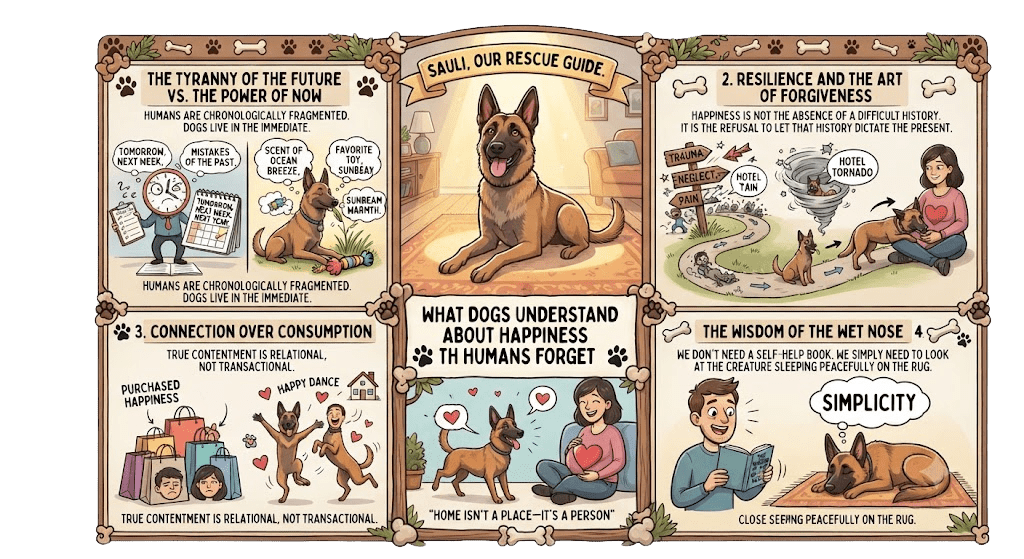
Humans often treat happiness as a distant destination—a summit reached through career milestones, material accumulation, or social validation. We spend our lives building elaborate “cages” of stress and schedules, hoping that the structure we create will eventually yield peace. Yet, in the quiet corners of our homes, a different philosophy is being practiced. Dogs, like the Belgian Malinois rescue Sauli, live as if happiness is not a reward to be earned but a natural state of being. By observing their resilience and presence, we can rediscover the fundamental truths of joy that we have allowed our modern complexities to obscure.
The Tyranny of the Future vs. The Power of Now
The most profound difference between human and canine happiness lies in our relationship with time. Humans are chronologically fragmented; we ruminate on the mistakes of the past and fret over the uncertainties of the future. We live according to rigid “to-do lists” that prioritize productivity over presence. Sauli, by contrast, possesses an absolute indifference to my calendar. Her world is defined entirely by the immediate: the scent of an ocean breeze, the texture of a favorite squeaky toy, or the warmth of a sunbeam on the living room rug.
When we walk, humans often view the path as a means to an end—a way to reach a destination or fulfill a step count. To a dog, every walk is an adventure in itself. They understand that happiness is found in the nuances of the journey—in the millions of stories told through a single blade of grass or the shifting wind. By constantly looking ahead, humans forget that the only place joy can actually be experienced is in the present moment.
Resilience and the Art of Forgiveness
In the world of animal rescue, we witness a type of “survival intelligence” that many humans struggle to emulate. Dogs like Sauli often arrive with complex pasts, having known trauma, neglect, or the pain of being unwanted. While humans might carry such wounds as permanent filters for their worldview, dogs demonstrate an incredible capacity for healing. They move through the “Hotel Tornado” phases of life—the chaos, the escapes, and the fear—to eventually rest their heads on a lap in a gesture of absolute trust.
Happiness, for a dog, is not the absence of a difficult history; it is the refusal to let that history dictate the present. They choose trust over suspicion and play over rumination. When a rescue dog decides to love again, it is a monumental act of courage that serves as a reminder to humans that we, too, can find room for a new chapter regardless of the “cages” we have previously inhabited.
Connection Over Consumption
Modern human society is built on the premise that happiness can be purchased. We seek fulfillment in things, yet we find that material joy is fleeting. Dogs remind us that true contentment is relational, not transactional. As Sauli’s journey illustrates, “Home isn’t a place—it’s a person”. A dog does not care about the square footage of the house or the prestige of the zip code; they care about the quality of the connection with their “hooman”.
This loyalty is not a given; it is earned through shared experiences and the quiet power of being chosen. In the simple act of leaning into a touch or greeting a loved one at the door with a “happy dance,” dogs prioritize the human-dog bond over all else. They understand that happiness is found in belonging and the realization that the best way to find oneself is to get lost in the service and love of another.
The Wisdom of the Wet Nose
Ultimately, what dogs understand—and humans forget—is that happiness is found in simplicity. It is found in the “unexpected wisdom of wet noses” and the realization that we don’t need a perfect life to be happy. We don’t need a self-help book to learn how to live; we simply need to look at the creature sleeping peacefully on the rug.
Sauli’s transformation from a scared rescue puppy into a confident, joyful companion is not just her success story; it is a lesson for her pawrent. She moved me from a life of sterile order to one of beautiful, chaotic meaning. In teaching us how to care for them, dogs teach us how to care for ourselves—by showing us how to be patient, present, and resilient. As we navigate our own journeys, we would do well to keep our hearts open to the adventure, just as Sauli did on her long road trip to California, trusting that home is wherever we are loved.

