Our Stories
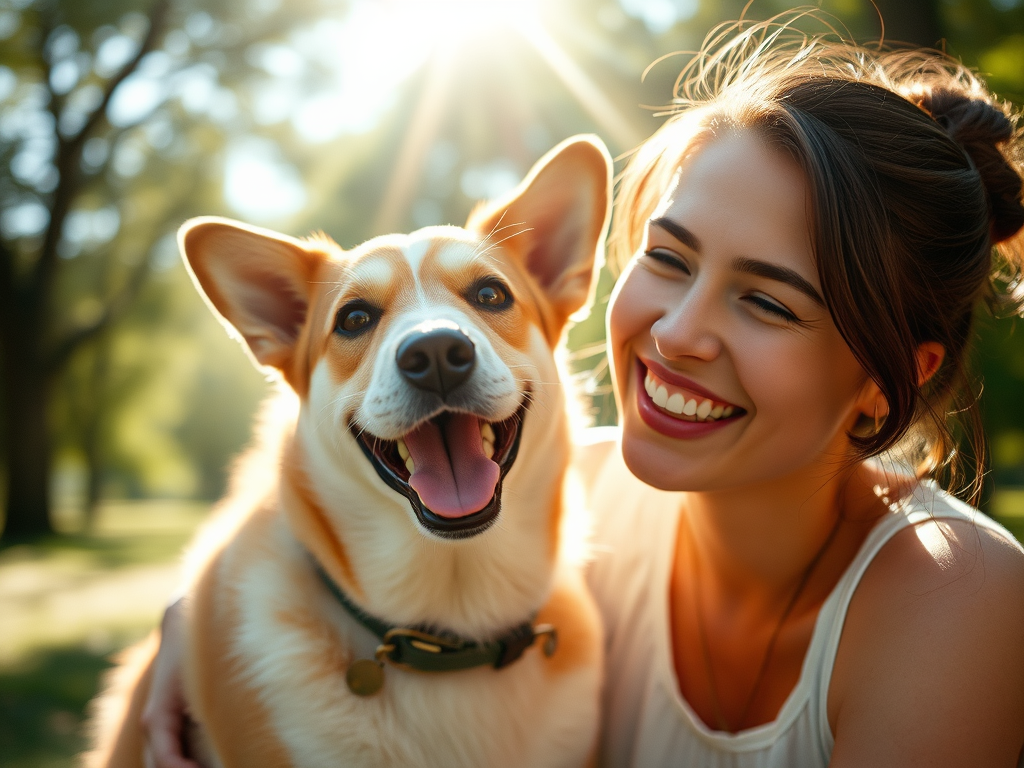
Welcome to a realm of limitless pawrenting possibilities. Each journey with your furry friend is as exhilarating as the destination. Every shared moment provides a chance to leave your unique paw print on the canvas of existence. You can craft stories filled with joy, laughter, and love. The only limit in this adventure is the extent of your imagination.
From the blog



Latest Posts
Welcome to a world of Pawrenting, where the thrills of shared experiences ignite joy and laughter. The journey is filled with adventures, as exhilarating as the destination, with each day bringing new opportunities for exploration. Start with early morning walks in the park. Then enjoy cozy afternoons spent cuddling on the couch. Every moment is a chance to connect with your furball. You can make memories that could last for a lifetime! As you navigate the ups and downs of pet parenthood, you’ll discover the unique bond that forms through play. Training and quiet times together further strengthen this bond. These experiences create a tapestry of unforgettable moments. They enrich both your lives.
-
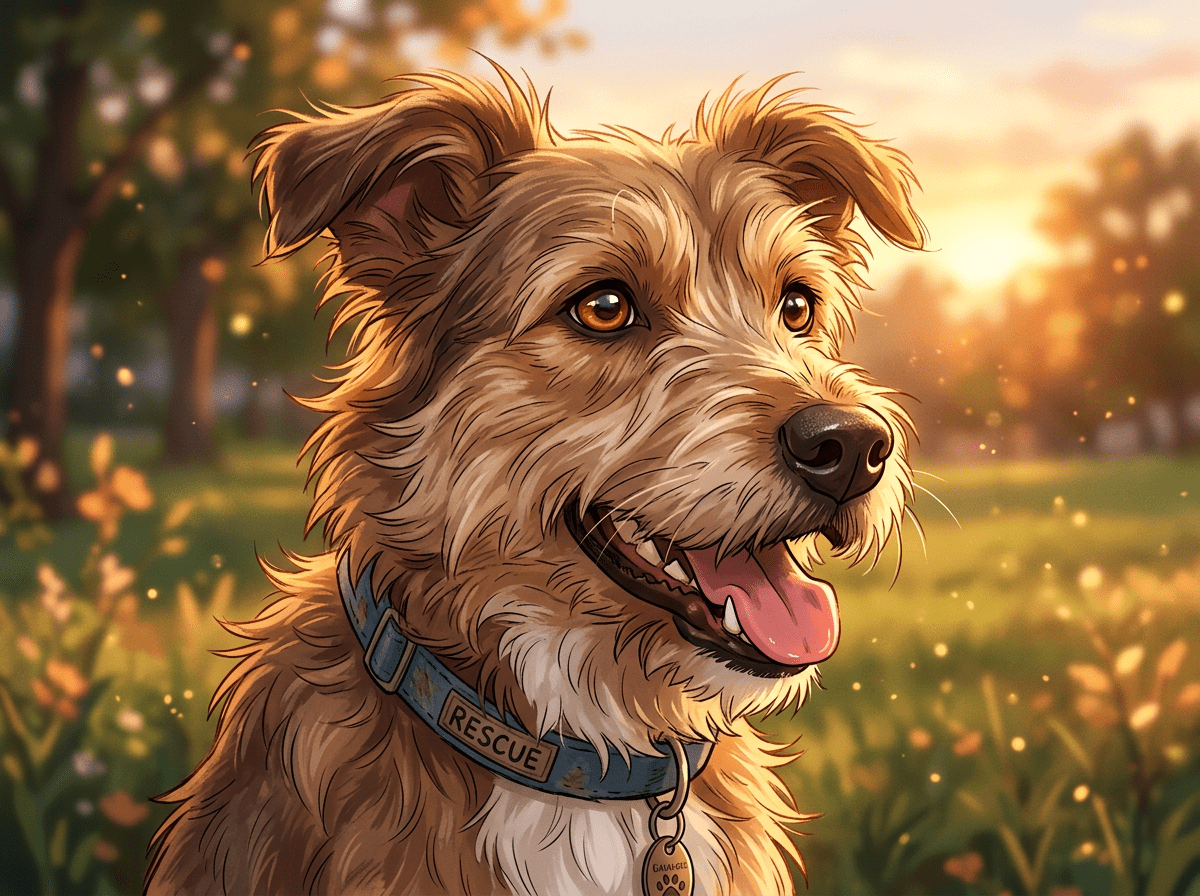
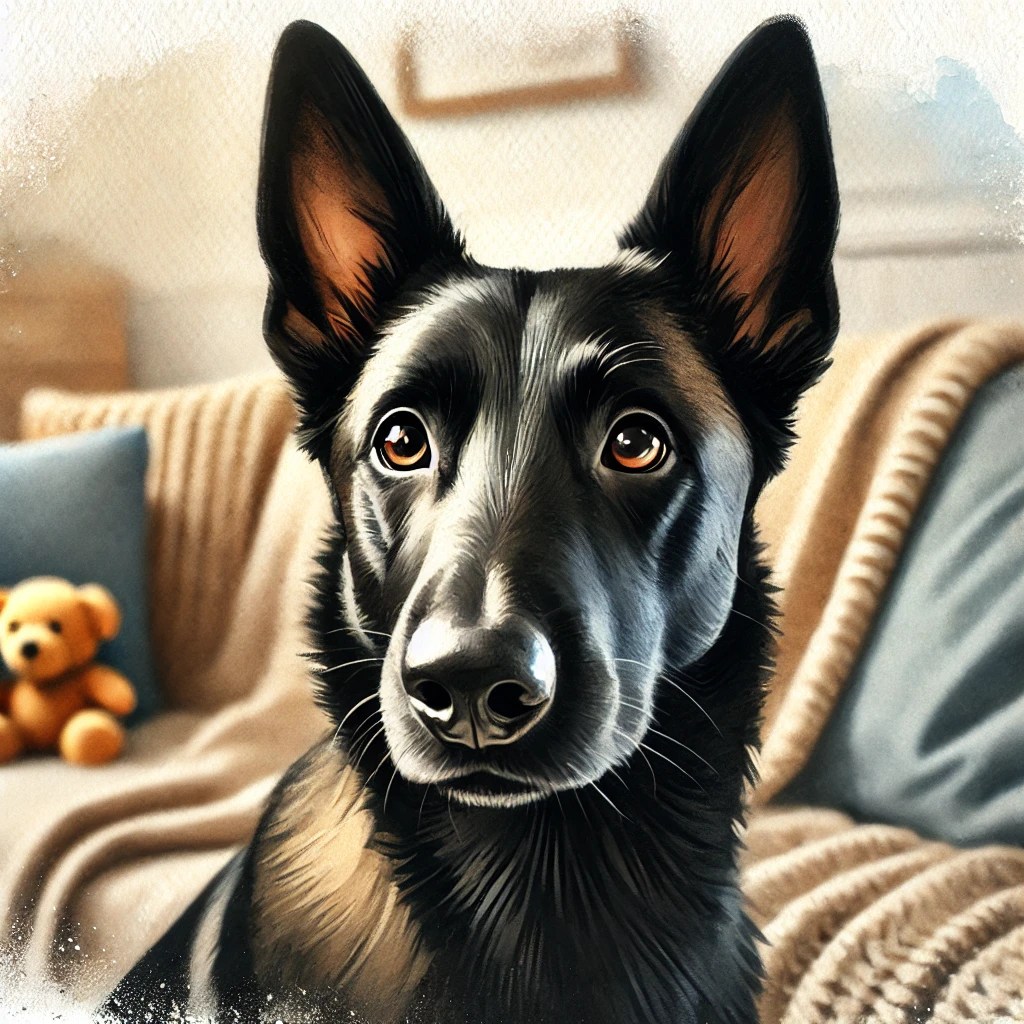
The narrative of animal rescue is often framed through the lens of human heroism—a savior reaching into a cage to offer a second chance to a creature without a voice. We see the photos of shelter dogs with their soulful, pleading eyes, and we are moved by a desire to “save” them. When I first saw Sauli’s picture on an adoption app, I viewed myself through that exact lens. I saw a tiny black puppy with ears too large for her head and eyes full of a wary, intelligent spark, and I thought, “I can save her.” I didn’t realize then that the cage I was actually opening was my own.
Adopting a dog is a profound choice that goes far beyond the transaction of acquiring a pet. To “adopt, not shop” is a commitment to a living story, one that often begins with trauma, neglect, or simply the misfortune of being unwanted. Unlike purchasing a puppy from a breeder, where the history is a clean slate and the expectations are curated, adoption is an invitation into a complex past. It requires a willingness to embrace the unknown and a capacity for patience that few other relationships demand. When you bring a rescue dog home, you aren’t just bringing home a companion; you are assuming stewardship of a soul that has already known the weight of the world.
The reality of the adoption process is rarely the cinematic “love at first sight” moment we see in advertisements. It is often messy, exhausting, and filled with “Hotel Tornado” moments. Our first weekend together in Wisconsin was not the serene bonding experience I had curated in my mind. Instead, it was a whirlwind of shredded pillows, escape attempts through hotel windows, and the sheer, exhausting reality of a high-drive Belgian Malinois. Sauli was not the grateful, passive recipient of my rescue. She was a force of nature that demanded I show up—not as a savior, but as a partner. This is the true face of adoption: the period of decompression where trust is earned in millimeters, not miles.
In the chaos of those early days, the dynamic began to shift. The rescue dog possesses a unique kind of resilience, a “survival intelligence” that makes the eventual bond incredibly deep. Because they have known loss, their loyalty is not a given; it is a hard-won treasure. When a rescue dog finally rests their head on your lap after weeks of wary observation, it is a monumental act of courage on their part. They are deciding, against their previous experience, that the world is safe again. This realization is where the true healing begins—not just for the dog, but for the human holding the leash.
We often speak about how rescue dogs are “grateful,” but that is a human projection. What they actually offer is presence. They force us to trade our rigid schedules for the rhythm of a wet nose and a wagging tail. They demand that we slow down, that we listen to the nuances of their body language, and that we find joy in the smallest victories—a successful walk, a night without an escape attempt, or a playful pounce on a squeaky toy. In teaching us how to care for them, they teach us how to care for ourselves. They reflect back to us our own capacity for patience, our own hidden reservoirs of compassion, and our own need for connection.
The profound shift in perspective occurs when you realize that the act of “saving” was actually mutual. I thought I was bringing Sauli home to San Francisco to give her a life, but she was actually teaching me how to live mine. She moved me from a life of sterile order to one of beautiful, chaotic meaning. The “rescue” was a mutual contract. I gave her a roof, a name, and a consistent bowl of kibble; she gave me a sense of purpose and the realization that the best way to find yourself is to get lost in the service of another living being.
To adopt is to choose the path of most resistance for the sake of the greatest reward. It is a stand against the commodification of living things and a vote for the underdog. It is an acknowledgement that every life, regardless of its start, deserves a middle and an end filled with love. Looking at Sauli today, I see a dog who has transformed from a scared rescue pup into a confident companion. But I also see a version of myself that is more patient, more present, and more resilient than I ever was before she entered my life.
Ultimately, to adopt a dog is to participate in one of the most beautiful cycles of healing available to us. It is a reminder that no matter how many walls we have built or how many times we have been “caged” by our own stresses and schedules, there is always room for a new chapter. When you open your home to a rescue, you aren’t just changing their world; you are allowing them to change yours. And in the end, you’ll find yourself wondering, as I often do while watching Sauli sleep peacefully on the rug, who really rescued whom.
-

The Belgian Malinois is often described in superlatives: the smartest, the fastest, the most loyal, and the most capable protection dog in the world. To the casual observer watching a viral video of a Malinois scaling a ten-foot wall or performing a precision backflip, they look like the ultimate canine companion—a biological superhero in a sleek, fawn-colored coat. However, there is a stark reality behind the highlight reels. Before you bring a Malinois into your home, you must understand that you are not just getting a dog; you are taking on a full-time lifestyle that demands absolute commitment.
The “Ferrari” of the Dog World
The most common analogy used by Malinois owners is that these dogs are Ferraris. They are high-performance machines built for speed, agility, and power. But just as you wouldn’t use a Ferrari to navigate a rocky mountain trail or leave it idling in a grocery store parking lot, you cannot treat a Malinois like a standard family pet. These are high-drive working dogs. In the “Pawrenting” philosophy, we emphasize that every dog has a “job” they were bred to do. For the Malinois, that job is everything, all at once, at 100 miles per hour.
Their energy levels are not merely high; they are astronomical. A Malinois does not have an “off” switch. While a Golden Retriever might be content with a thirty-minute walk and an afternoon on the couch, a Malinois views a five-mile run as a warm-up. Without a structured outlet for this physical energy, the dog will find its own work—which usually involves dismantling your drywall, shredding your sofa, or “herding” your children by nipping at their heels.
The Burden of Intelligence
Intelligence is often cited as a primary reason people want a Malinois, but in the wrong hands, intelligence is a liability. A smart dog is a dog that can outthink you. If you are not providing consistent, complex mental stimulation, a Malinois will use its brain to solve problems you didn’t know you had. They can learn to open doors, manipulate locks, and bypass supposedly “dog-proof” barriers with chilling efficiency.
Training a Malinois is a lifelong process, not a six-week puppy course. They require engagement that challenges their minds—scent work, advanced obedience, agility, or protection sports. They don’t just want to be with you; they want to work with you. This “velcro” nature means they are prone to severe separation anxiety if they aren’t properly conditioned and mentally satisfied. They do not want to be left in a backyard; they want to be part of your every waking thought.
The “Maligator” and the Mouth
There is a reason the breed is affectionately (and sometimes fearfully) nicknamed the “Maligator.” These dogs are extremely “mouthy.” They experience the world through their jaws. As puppies, they are notorious for biting and nipping, and as adults, they have a high prey drive. Anything that moves—a squirrel, a bicycle, a running child—can trigger their instinct to chase and grab.
This makes them a challenging choice for families with small children or other small pets. While they can be socialized to live harmoniously, it requires constant vigilance and professional-level management. They are intense, and their play style is physical. If you are looking for a dog that will gently lounge with toddlers, the Malinois is likely not the breed for you.
Who is the Right Owner?
The ideal Malinois owner is an active, experienced “pawrent” who views dog training as a primary hobby. You must be someone who enjoys being outside in the rain to practice drills, someone who reads up on canine psychology for fun, and someone who has the financial resources for professional training and high-quality enrichment.
You must be consistent. A Malinois will exploit any inconsistency in your leadership. If you say “down” and they don’t go down, and you don’t follow through, you have just taught them that your commands are optional. They require a handler who is firm but fair, providing clear boundaries and immense amounts of positive reinforcement for a job well done.
The Reward of the Rescue
Despite these warnings, the bond with a Malinois is unlike any other. As we see in the story of Sauli, a rescue Malinois brings a level of intensity and loyalty that can transform a human’s life. When you meet their needs, they become an extension of your own shadow. They are incredibly intuitive, often sensing your moods before you do.
Choosing a Malinois is a decision to step out of the “standard” lane of dog ownership and into an elite, demanding partnership. If you are ready for the “Hotel Tornado” moments and the lifelong commitment to growth, the Malinois will give you everything they have. But if you are looking for a dog to simply “have,” keep looking.
A Malinois isn’t a dog you have; it’s a dog you live.
-

The concept of “rules” is a curious one when you live with a Belgian Malinois. For most of us, rules are the invisible architecture of a functioning household—they are the social contracts we sign with our environment, governing things like which furniture is for lounging and which doors lead to the outside world. To a human, a rule is a boundary. To my Malinois, Sauli, a rule is merely a suggestion—a soft, flexible guideline that is perpetually open to negotiation, reinterpretation, and, most frequently, total disregard.
Living with a Malinois is, by definition, an exercise in humility. These dogs were bred for high-stakes work, for navigating complex tasks with lightning-fast cognition and an unwavering drive. When you bring that level of intelligence and intensity into a domestic setting, you are essentially introducing a tactical genius into a world that, quite frankly, isn’t prepared for it. Sauli doesn’t just walk through the house; she audits it. She assesses every barrier as a challenge and every command as a philosophical debate.
Take, for instance, the “no-go” zones. I have attempted to establish clear boundaries, placing baby gates at the entrance to the kitchen and the home office. To a retriever or a spaniel, a baby gate is a firm “no.” To Sauli, a baby gate is an elaborate puzzle. She doesn’t just jump over it—that would be too easy. She sits, watches, and learns. She monitors the latch, studies the tension, and eventually, she finds the one loose screw or the one slight weakness in the hinges that allows her to bypass the barrier with the grace of a professional gymnast. It isn’t spite; it’s scientific inquiry. She is constantly testing the hypothesis that she can go where she pleases, and every time I leave a door cracked, she proves her hypothesis correct.
Then there is the matter of “off” furniture. We have established, with great firmess, that the cream-colored sofa is for humans, while her orthopedic bed is for her. Sauli nods in agreement during training sessions, wagging her tail in apparent submission. But the moment I step out to the kitchen or become engrossed in an email, the transformation begins. It’s the “Malinois Morph.” She doesn’t just jump up; she begins a slow, calculated creep. One paw onto the cushion. Then another. She freezes, checking if I have noticed. If I remain still, she melts into the sofa, draping herself across the pillows with such an air of entitlement that I almost feel guilty for asking her to move. If I do walk in, she doesn’t scramble off in shame. Instead, she offers a slow blink, stretches deeply, and gives me a look that says, “I wasn’t on the sofa, I was simply… inspecting the comfort level.”
The most fascinating part of this dynamic is that she is rarely doing these things to be “bad.” She isn’t a chaotic force of nature because she wants to ruin my day. She is chaotic because she is constantly looking for the most efficient, most engaging way to interact with her world. If a door is closed, it represents a vacuum of information—what is on the other side? If a cabinet is locked, there must be something of value inside. Her intelligence is her greatest asset, and her greatest liability as a roommate.
This leads to the question of whether I should be more consistent, or if I should simply accept that my rules are, indeed, just suggestions. There is a certain beauty in the flexibility. When I stop fighting the fact that Sauli views my rules as optional, I start to appreciate the game. We are constantly in a dance of evolving boundaries. I create a new lock; she finds a new bypass. I set a new boundary; she finds a new loophole.
Living with a dog who thinks rules are suggestions forces you to be a more interesting person. You can’t just be the “master” of a Malinois; you have to be the director of their play, the creator of their challenges, and the keeper of their focus. If I don’t give her a “rule” that is actually a mission—a trick to learn, a game to play, a problem to solve—she will create her own rules, and those rules will almost certainly involve me losing my sanity.
In the end, I have learned that while I may hold the title of “Human” in our relationship, Sauli is the one dictating the pace of our daily lives. I may set the household rules, but Sauli is the one who decides which ones are worth the effort of negotiation. And honestly? I wouldn’t have it any other way. A rule-follower is a dog who listens. A suggestion-maker is a dog who lives. And watching Sauli live, navigate, and challenge her world with such relentless, joyful curiosity is the greatest privilege of my life—even if she does spend way too much time on my sofa.

