
Our Stories
Welcome to a realm of limitless pawrenting possibilities. Each journey with your furry friend is as exhilarating as the destination. Every shared moment provides a chance to leave your unique paw print on the canvas of existence. You can craft stories filled with joy, laughter, and love. The only limit in this adventure is the extent of your imagination.
From the blog




Latest Posts
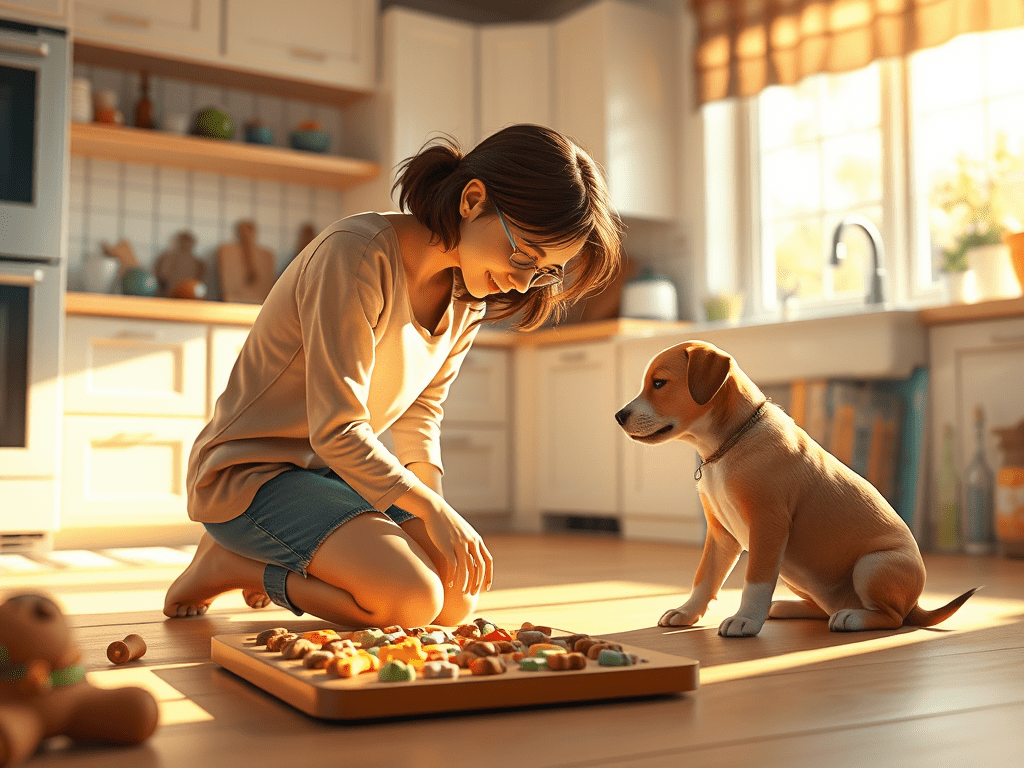
Welcome to a world of Pawrenting, where the thrills of shared experiences ignite joy and laughter. The journey is filled with adventures, as exhilarating as the destination, with each day bringing new opportunities for exploration. Start with early morning walks in the park. Then enjoy cozy afternoons spent cuddling on the couch. Every moment is a chance to connect with your furball. You can make memories that could last for a lifetime! As you navigate the ups and downs of pet parenthood, you’ll discover the unique bond that forms through play. Training and quiet times together further strengthen this bond. These experiences create a tapestry of unforgettable moments. They enrich both your lives.
-
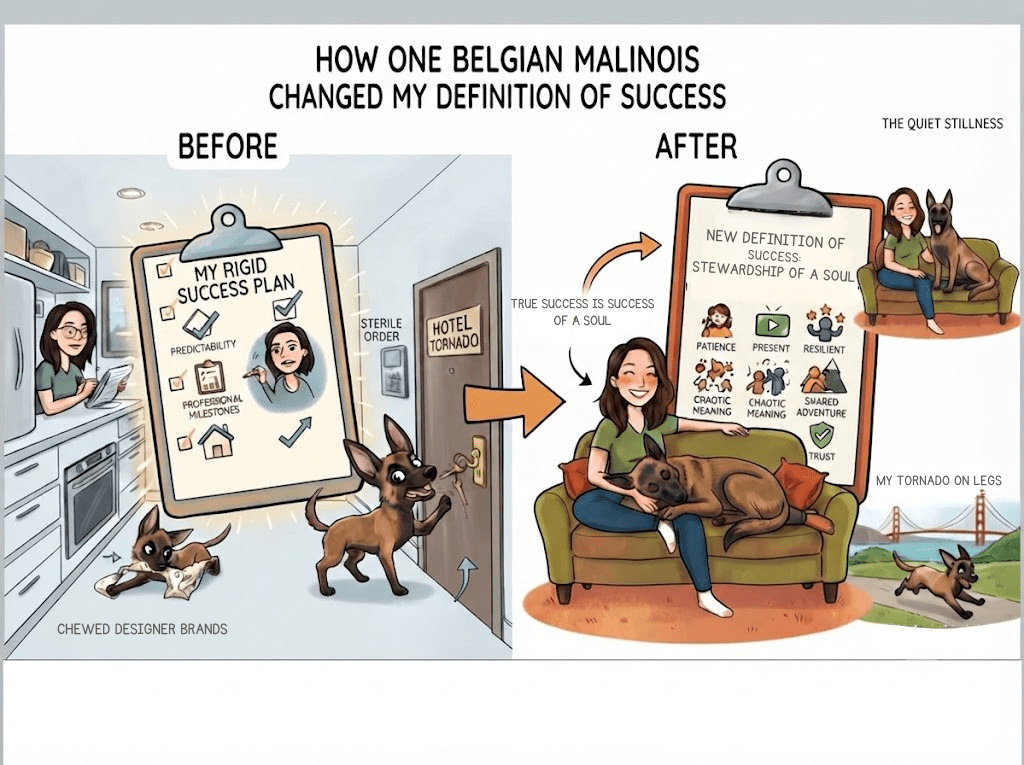
Before I met Sauli, my definition of success was a rigid architecture built of predictability, professional milestones, and a highly curated sense of order. Living in San Francisco, life often feels like a series of optimizations: the most efficient schedule, the cleanest home, and the most linear career path. I viewed my life through the lens of a “savior” when I decided to adopt a rescue dog, assuming I would simply integrate a grateful, passive creature into my existing, controlled environment. I didn’t realize that true success isn’t found in the quiet moments of mastery, but in the loud, beautiful, and often exhausting chaos of genuine connection.
The Hero Myth and the Wisconsin Reality
The narrative of animal rescue is frequently framed as an act of human heroism—a savior offering a second chance to a creature without a voice. When I first saw Sauli’s picture on an adoption app, featuring her comically large ears and intelligent, wary eyes, I bought into that myth. I believed that “saving” her would be an organized project. However, our first meeting in Wisconsin quickly dismantled that illusion.
Sauli was not the docile, grateful recipient I had imagined; she was a lean, dainty furball with a survival intelligence that far outpaced my expectations. Our first weekend together, famously known as the “Hotel Tornado,” was a whirlwind of shredded pillows and escape attempts. She wasn’t a project to be completed; she was a force of nature that demanded I trade my rigid schedules for the rhythm of her needs. Success was no longer about a peaceful hotel stay; it was about surviving the storm together and beginning to understand the difference between forced obedience and hard-won trust.
The Malinois Lesson: From To-Dos to Presence
A Belgian Malinois is not a dog for a person who seeks a sterile life. They are brilliant, high-drive athletes who view “rules” as suggestions and “doors” as optional. Sauli, in particular, has never read a self-help book and cares nothing for my daily to-do list. Her presence forced a radical shift in my perspective. In my previous life, a successful day was one where every box was checked. With Sauli, success became the “unexpected wisdom of wet noses”—the realization that dogs understand a happiness that humans often forget by living entirely in the present.
Sauli’s intelligence is not just academic; it is emotional and tactical. She is a professional escape artist who once attempted to figure out a hotel door lock while I slept. This level of drive requires more than just exercise; it requires connection. She didn’t need a perfect human; she needed a partner. This shifted my definition of a “good day” from one of solitary achievement to one of shared adventure, where even a walk can be a monumental success if it involves curiosity and mutual respect.
Redefining Achievement Through Trust
In the world of professional accolades, success is often measured by what we can control. In the world of rescue pawrenting, success is measured by what we can inspire. For a rescue dog who has known loss or trauma, loyalty is not a given; it is a treasure that must be earned in millimeters. The moment Sauli finally rested her head on my lap after hours of mischief was a more profound achievement than any career promotion. It was a monumental act of courage on her part, deciding that the world—and specifically, I—was safe again.
This realization taught me that success is a mutual contract. I gave Sauli a roof and a name, but she gave me a sense of purpose that transcended my own needs. She moved me from a life of sterile order to one of chaotic meaning. I thought I was bringing her to San Francisco to give her a life, but she was the one teaching me how to live mine. We often projecting “gratitude” onto rescue dogs, but what they actually offer is presence—a demand that we slow down and listen to the nuances of life.
The Beautiful, Chaotic Meaning
Looking at Sauli today, I see a dog who has transformed from a scared rescue pup into a confident companion who zooms through San Francisco parks with a blur of black fur. But the more significant transformation happened within me. I am more patient, more present, and more resilient than I ever was before she entered my life. My definition of success has permanently moved away from the commodification of time and toward the stewardship of a soul.
Success is now found in the small victories: a successful night without an escape attempt, a playful pounce on a squeaky toy, or the quiet stillness of a rainy day on the couch. Sauli taught me that loyalty is earned, not trained, and that home isn’t a place, but someone who waits for you. She showed me that maybe we are all rescue stories, waiting for someone to open the cage of our own making. By losing myself in the service of another living being, I found a version of success that is messy, unpredictable, and infinitely more rewarding than the sterile order I once prized. In the end, it is no longer a question of who rescued whom; it is simply the story of two lives that became a family, one tail wag at a time.
-

The love of a rescue dog is not merely affection; it is a profound, hard-won gratitude that defies simple categorization. For those who have never walked this path, the bond may appear identical to the connection shared with any other canine companion. Yet, to those who have looked into the eyes of a dog who has known the cold indifference of a shelter cage or the uncertainty of the streets, it is clear that something entirely different is occurring. Rescue dogs do not just love us; they appear to love us with a specific, heightened intensity, as if they are perpetually aware of the immense distance between who they once were and who they are now.
To understand why this bond feels distinct, we must first confront the reality of their history. A dog who has been abandoned, surrendered, or lost has experienced the foundational rupture of security. Their world—once defined by consistency and trust—was fundamentally broken. When they arrive in a forever home, they do not enter with the blank slate of a puppy raised from birth in a stable environment. They carry the quiet, lingering ghosts of that past. They bring with them a unique form of vigilance, an alertness that suggests they are waiting to see if this new comfort is, like the last, merely temporary.
When a rescue dog finally chooses to let that guard down, the effect is transformative. The process of earning a rescue dog’s trust is slow and deliberate. It is not given freely upon first meeting; it is built through thousands of tiny, consistent actions. It is the result of consistent meal times, the predictability of a morning routine, and the quiet patience of a human who chooses not to rush, push, or demand. Because the trust was earned rather than assumed, it carries a weight that is absent in easier relationships. When that dog finally rests their head on your lap, or greets you at the door with a wagging tail that seems to vibrate their entire being, they are not just expressing happiness. They are expressing relief. They are acknowledging that, finally, the cycle of uncertainty has ended.
This gratitude often manifests as an almost desperate loyalty. Rescue dogs seem to have a sophisticated, if subconscious, understanding that they have been chosen. In a shelter environment, dogs are often surrounded by noise, smell, and the constant stress of being overlooked. When they are finally singled out—brought into a home, given a name, and provided with a bed of their own—the shift is monumental. They often track their owners from room to room, not out of a need for control, but out of a deep-seated desire to remain in the presence of the one entity that proved to be their constant. This “shadowing” behavior is a hallmark of the rescue bond; it is the dog’s way of saying, “I have found my person, and I will not let them out of my sight again.”
Furthermore, the love of a rescue dog is often defined by the concept of “witnessing.” There is a therapeutic quality to the way they interact with us. Having survived their own trauma, they seem uniquely equipped to respond to our own. Rescue dog owners often report that their pets seem to sense when the human is struggling, quiet, or anxious. They don’t offer platitudes; they offer presence. They have known fear and loneliness, and they seem to recognize those echoes in the humans who saved them. In this way, the rescue bond becomes a two-way street of recovery. We save them from the uncertainty of their past, and in return, they anchor us in the beauty of the present. They teach us that resilience is a practice, and that it is never too late to begin again.
Ultimately, the reason rescue dogs love differently is that their love is a choice. Every single day, they are choosing to trust despite the evidence of their past lives. Every time they ignore a loud noise or approach a stranger without shrinking, they are demonstrating a massive act of courage. Their love is not a passive instinct; it is an active participation in their own healing. When you share your life with a rescue dog, you are not just a pet owner. You are a partner in their reconstruction. You are the architect of their safety and the curator of their joy. And in exchange, they offer you a love that is unpretentious, deeply anchored, and profoundly appreciative. They love us because we proved, against all odds, that the world could be a kind place. That, perhaps, is the most powerful gift any living soul can offer another.
-

It’s not every day you receive a phone call that starts with, “So, we need to talk about Sauli.”
When you’re a dog owner, you expect the usual gamut of feedback: She’s a fast learner, she plays well with others, she’s a little exuberant. But when you’re the parent of a high-drive Belgian Malinois, the conversations tend to take a sharper, more urgent turn. When I heard those words from the daycare manager, I didn’t immediately panic. I assumed it was about a shredded leash or perhaps a minor disagreement over a ball. I certainly wasn’t prepared for the phrase that followed: “We’ve decided it’s best if Sauli doesn’t return.”
My dog had been fired.
It sounds comical, doesn’t it? Being “fired” implies a level of professional negligence or misconduct that a dog shouldn’t theoretically be capable of. Dogs are supposed to be innocent, happy creatures who exist in a state of perpetual, wagging-tailed benevolence. But as I stood there in the daycare reception area, listening to the manager recount a saga of “excessive herding,” “insistent rule enforcement,” and “daycare-wide chaos,” I realized that Sauli wasn’t just a dog playing in a park. She was an over-caffeinated middle manager with a clipboard, trying to organize an office that had no intention of being organized.
The reality of living with a Belgian Malinois is that you are not just living with a pet; you are living with a force of nature that has been weaponized for work. They are the Navy SEALs of the canine world—brilliant, tireless, and possessing a focus that can be both their greatest asset and their most disruptive trait. Sauli, my rescue Malinois, didn’t view daycare as a place to relax and snooze on a pile of other dogs. She viewed it as a job site. And in her mind, the job was simple: everyone must be moving, everyone must be controlled, and everyone must follow the protocols she had invented on the spot.
The “firing” wasn’t the result of malice; it was a mismatch of professional expectations. Sauli wanted to police the perimeters; the other dogs just wanted to smell each other’s ears in peace. She was a professional athlete trapped in a room of recreational strollers, and she handled the frustration with the only tool she had: relentless, high-octane supervision. If a dog stopped to sniff a tree, Sauli would nudge them forward. If a game of chase slowed down, she would accelerate it. She was the project manager of the playgroup, and unfortunately, nobody had signed up for her coaching sessions.
As I walked out of the facility for the last time, with Sauli trotting beside me, looking entirely unbothered by her professional termination, I felt a strange cocktail of embarrassment and admiration. On one hand, I was the human parent of the “difficult kid,” the one who made the teachers sigh when they saw me coming. On the other hand, I couldn’t help but marvel at the sheer, unfiltered intensity of her spirit. She was unapologetically who she was. She had taken a task—daycare—and she had performed it with such ferocity that she broke the system.
This experience forced me to rethink the entire philosophy of “pawrenting.” We often try to fit our dogs into these standardized molds: they should be calm in the house, playful in the park, and well-behaved in daycare. We want them to be “good” by human metrics. But when you have a dog with Sauli’s specific heritage and drive, you realize that “good” is a relative term. To the daycare, she was “bad” because she was disruptive. To me, she was a dog with an incredible work ethic who simply lacked the proper outlet for it.
Being fired from daycare was, in hindsight, the best thing that could have happened to us. It forced me to stop outsourcing her engagement to a facility and start building a life that actually suited her. We traded the rigid, supervised structure of the playgroup for the open, unpredictable landscape of the world. We found hiking trails where she could satisfy her need to patrol, nose-work games where she could use that brilliant brain to “work,” and one-on-one sessions that respected her intensity rather than trying to stifle it.
I learned that you can’t punish or “train out” the very traits that make a Malinois a Malinois. You have to pivot. You have to become a partner rather than a manager. Sauli didn’t need to be forced into a mold that wasn’t designed for her; she needed to be trusted to do the work she was built for.
So, yes, she was fired. Her professional career in group daycare ended in disgrace. But she gained something much better: a human who finally understood that her chaos wasn’t a defect—it was an invitation to go find a bigger, more meaningful adventure. And frankly, the other dogs at the daycare are probably having a much quieter week without their self-appointed, fuzzy foreman keeping them all on schedule.

