
Our Stories
Welcome to a realm of limitless pawrenting possibilities. Each journey with your furry friend is as exhilarating as the destination. Every shared moment provides a chance to leave your unique paw print on the canvas of existence. You can craft stories filled with joy, laughter, and love. The only limit in this adventure is the extent of your imagination.
From the blog



Latest Posts
Welcome to a world of Pawrenting, where the thrills of shared experiences ignite joy and laughter. The journey is filled with adventures, as exhilarating as the destination, with each day bringing new opportunities for exploration. Start with early morning walks in the park. Then enjoy cozy afternoons spent cuddling on the couch. Every moment is a chance to connect with your furball. You can make memories that could last for a lifetime! As you navigate the ups and downs of pet parenthood, you’ll discover the unique bond that forms through play. Training and quiet times together further strengthen this bond. These experiences create a tapestry of unforgettable moments. They enrich both your lives.
-
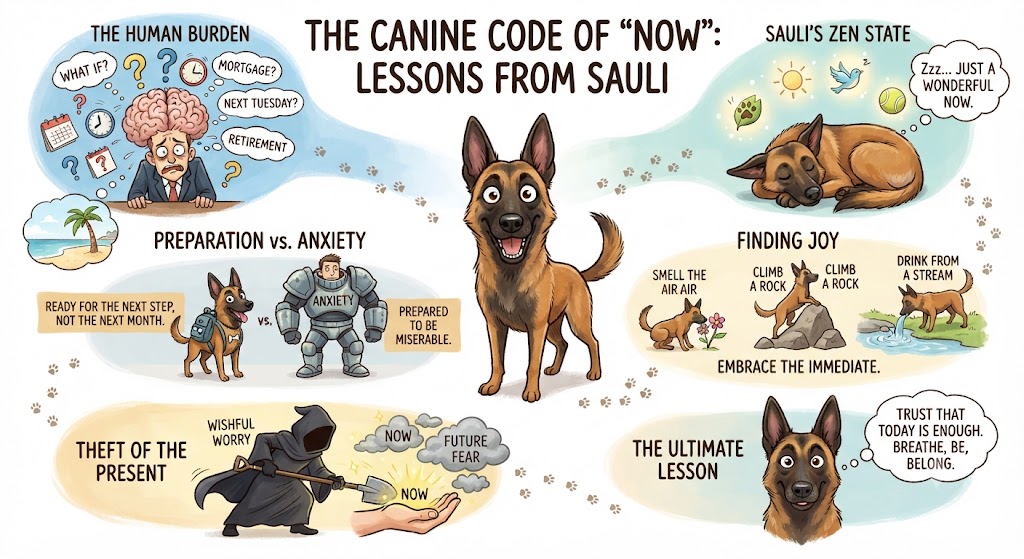
Human life is a constant navigation of what comes next. We are architects of anticipation, spending our days constructing elaborate scaffolds of “what if” and “when.” We fret over Monday’s meetings on a Sunday evening, we stress about retirement while still in our twenties, and we mourn missed opportunities that haven’t even arrived yet. We live in the future, a phantom timeline that is always just out of reach.
Sauli, my Belgian Malinois, lives in a completely different world. She does not know what a calendar is. She has no concept of “next week,” no dread of the upcoming month, and no anxiety about the changing of the seasons. To Sauli, there is only now. This is not a lack of intelligence; it is a profound, instinctual wisdom that we humans have traded away in exchange for our complex, predictive brains.
I often watch her in the moments between our activities. If we are sitting on the rug, she is entirely consumed by the texture of the carpet under her paws, the dust motes dancing in the afternoon light, or the subtle sound of a bird landing in the tree outside. She is not thinking about the walk we took three hours ago, nor is she plotting the dinner she will receive in another three. She is fully, vibrantly present. In that state, there is no room for worry, because worry requires a future that does not exist for her.
The root of this canine superpower is trust. Sauli never worries about tomorrow because she has deep, unshakeable faith in the present. She knows that as long as I am there, her bowl will be filled, her walks will happen, and her head will find a safe place to rest. When we are walking through the park, she doesn’t check her watch to ensure we get home by a certain time; she trusts that I am the guardian of the schedule. She is free to be a dog because I have assumed the burden of the clock.
Humans, conversely, often suffer because we feel we must be the guardians of our own entire lives. We feel that if we aren’t worrying about tomorrow, we aren’t prepared for it. But Sauli shows me that there is a difference between preparation and anxiety. You can prepare for the future—you can buy the dog food, you can pay the mortgage, you can study for the exam—without living in the misery of it. Sauli prepares for her life simply by being healthy, alert, and engaged. She is always ready for the next moment because she is fully participating in this one.
When we are on a hike, she doesn’t worry about whether the trail will end. She just loves the mud between her toes, the rustle of the leaves, and the thrill of the chase. If she encounters a rock, she climbs it. If she finds a stream, she drinks from it. She is an adventurer of the immediate. When she sleeps, she doesn’t fret about her dreams; she lets them take her. When she wakes, she is ready to leap into the next sensation.
Perhaps the most healing lesson Sauli has taught me is that worry is a theft. It steals the joy of the current moment and replaces it with a fear of a future that may never come to pass. When I find myself spiraling into the “what ifs,” I look at her. She is usually napping, her breathing steady and deep, her paws twitching as she runs through some canine dream. She is entirely unbothered. She trusts that tomorrow will take care of itself, or more accurately, she doesn’t even know that tomorrow is a thing to be feared.
To be more like Sauli is not to stop planning; it is to stop living in the future. It is the practice of anchoring oneself in the physical world. It is the understanding that our capacity for joy is not infinite, and every second spent in anxious foresight is a second of happiness surrendered. We can learn to carry our responsibilities without letting them carry us. We can learn to walk through the park of our lives and actually smell the air, instead of wondering if it’s going to rain next Tuesday.
Ultimately, Sauli never worries about tomorrow because she knows that the only thing she truly possesses is this breath, this heartbeat, and this connection. And in the end, isn’t that all any of us really have? If we could learn to trust the present as much as she does, we might find that tomorrow, when it finally arrives, is far less frightening than we ever imagined.
-
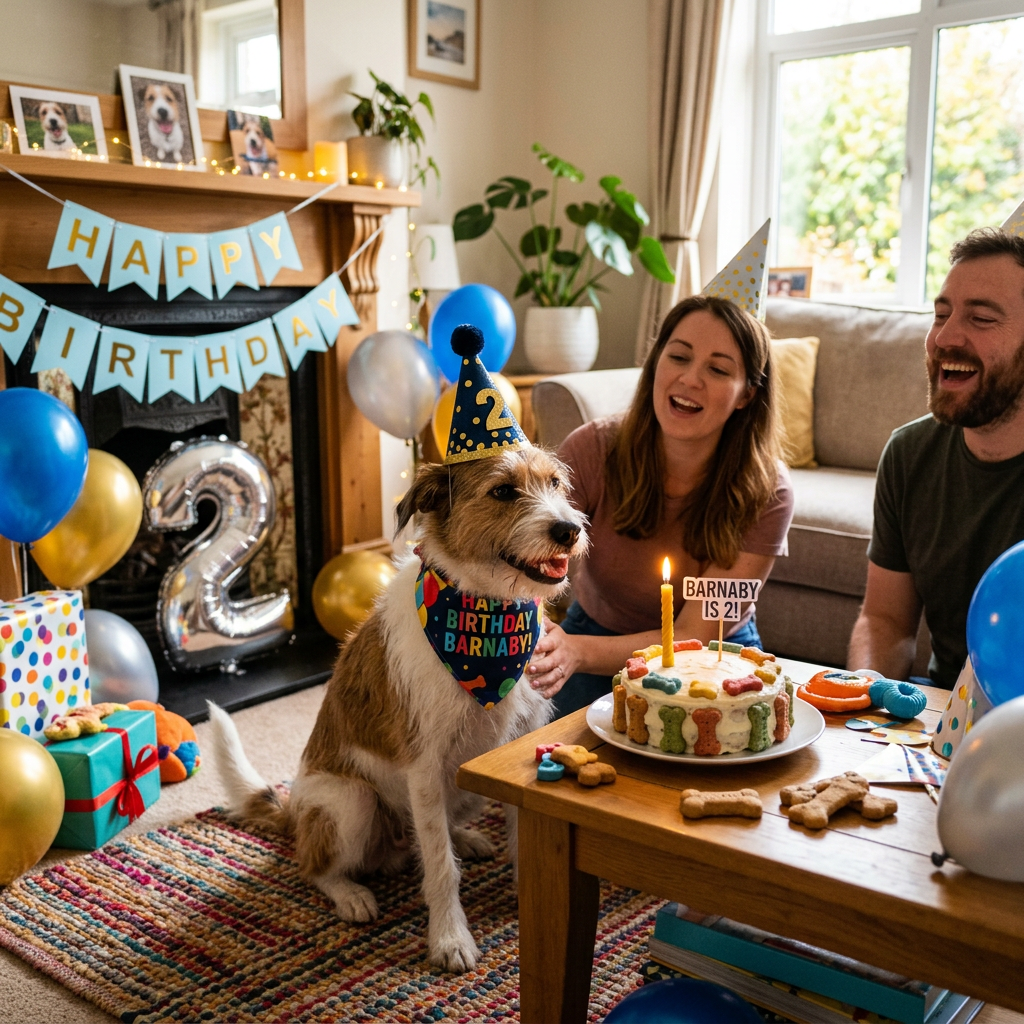
There is a quiet, profound magic in the concept of a second birthday. For most of us, our birth date is a fixed point on the calendar—a singular, unchangeable marker of our arrival into the world. But for a rescue dog, life is often split into two distinct chapters, separated by the threshold of a shelter door. When you bring a rescue dog home, you aren’t just adding a pet to your life; you are acknowledging a pivotal pivot point in their existence. You are celebrating two birthdays: the day they were born, and the day they were reborn.
The “first” birthday is biological—a date recorded in a health card or, more often, estimated by a veterinarian based on the condition of a puppy’s teeth or the wear on an older dog’s coat. It is the moment they took their first breath, regardless of where or how it happened. But the “second” birthday—the day of adoption—is something entirely different. It is the day they stopped merely surviving and started living.
When you adopt a rescue dog, you rarely know their true history. Their records are often blank, their early months a blur of uncertainty. They arrive with habits forged in the crucible of their previous lives: the way they flinch at a sudden noise, the specific way they hoard food, or the intense, almost desperate loyalty they offer when they finally feel safe. These are the fingerprints of their past. Celebrating their “Gotcha Day” is not just about marking time; it is a conscious ritual of recognition. It is a way of telling them, “Before today, you were someone else’s burden or society’s castaway. But from this moment forward, you are ours.”
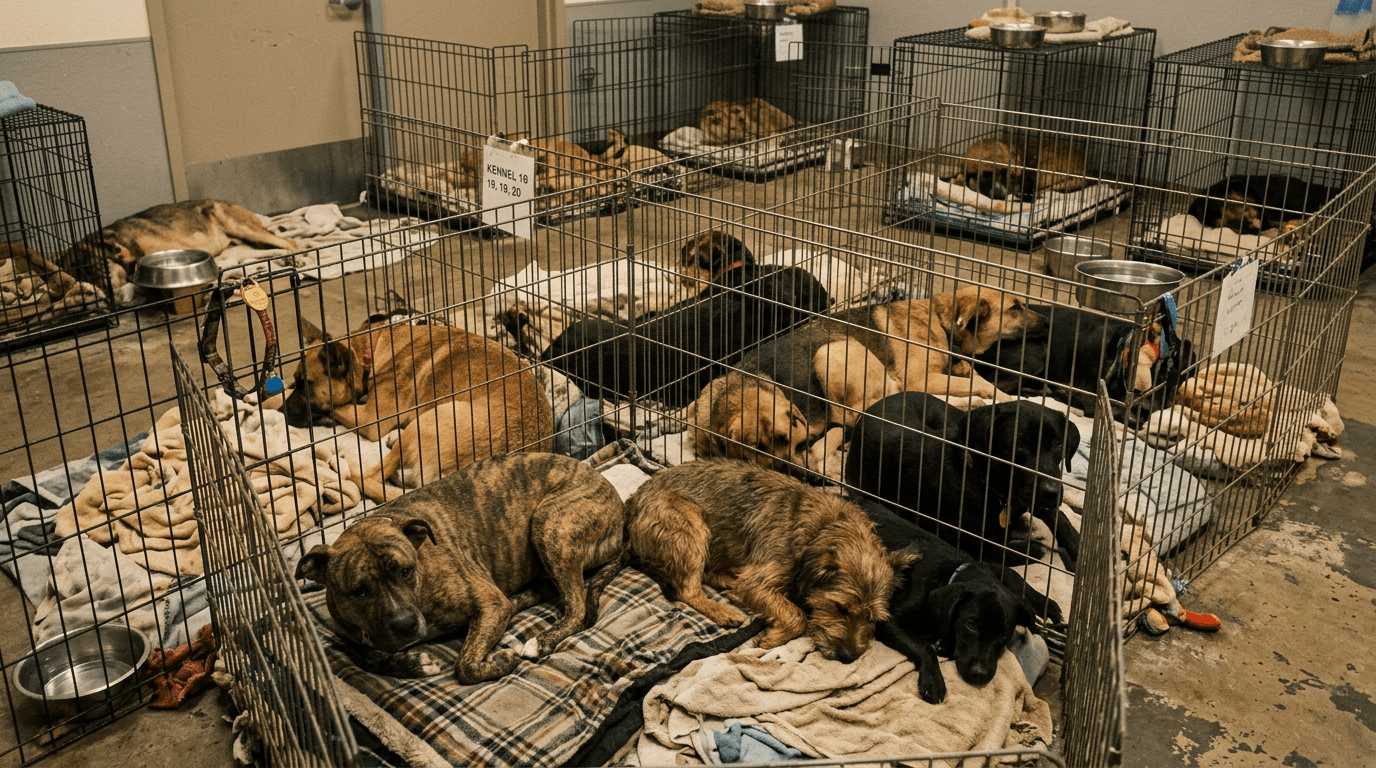
The significance of this second birthday is deepened by the reality of the rescue experience. Many rescue dogs enter the shelter system at their lowest point—confused, frightened, or even physically compromised. They have been stripped of the only environment they knew, however inadequate it might have been. To go from a cold kennel floor, surrounded by the cacophony of barking and the scent of fear, to the warmth of a home where a bowl is filled and a bed is soft, is not merely a change in location. It is a psychological transformation.
I think of the dogs who have spent years in shelters, watching the world go by through chain-link fences. For them, that second birthday is the moment the cage door finally swings open. It is the second of liberation. When we celebrate these dates, we are honoring that resilience. We are acknowledging that this animal, who had every reason to lose faith in the world, decided to trust us instead.
There is also something deeply therapeutic about this for the human side of the equation. In a world that often feels fractured and difficult, the act of rescue is a simple, tangible expression of hope. When you bake a dog-friendly cake or take your dog to their favorite park on the anniversary of their adoption, you are reminding yourself of the power of a second chance. You are actively participating in their healing. Every year that passes is a reminder that the trauma of their past is fading, replaced by the stability of the present.
For the rescue dog, the second birthday represents the establishment of a “forever.” They learn that the world isn’t a place of transience—that the person who feeds them is the same person who will love them the next day, and the next, and the next. This reliability is what eventually softens the edges of their fear. It is the foundation upon which their personality truly blooms. We see it happen: the dog who hid under the table for the first month is suddenly the one greeting us at the door with a wagging tail that seems to move their entire body. That transformation is the true gift of the second birthday.
Ultimately, acknowledging two birthdays is a testament to the idea that our past does not have to define our future. Just as we humans can reinvent ourselves, heal from our own past hurts, and start over, our dogs do the same. They teach us that life is not just about the circumstances of our beginning, but about the quality of the journey that follows.
So, mark the calendar. Whether you know the exact day they were born or have to guess at the year, the most important date is the one where your lives intersected. That is the day their world changed forever, and truthfully, yours did too. Every rescue dog has two birthdays, and by celebrating the second one, we celebrate the enduring, beautiful truth that love has the power to write a brand new story.
-
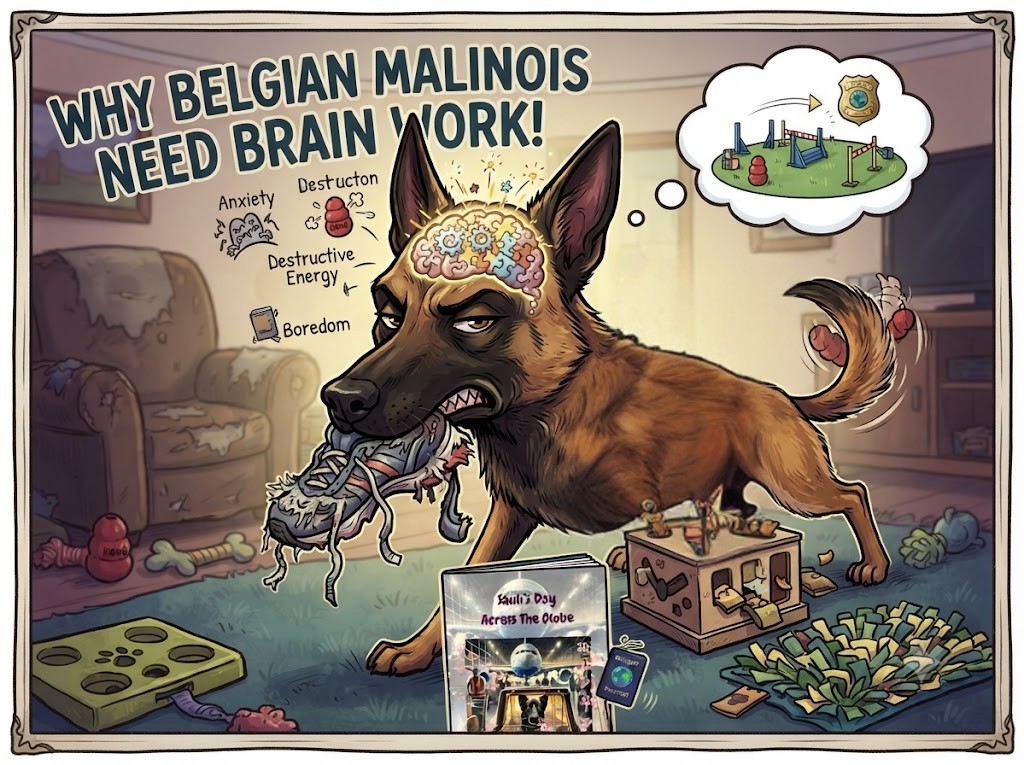
To the uninitiated, the Belgian Malinois looks like a sleeker, more aerodynamic version of a German Shepherd. To those who share their lives with one, they are often described as “maligators,” “fur missiles,” or simply a full-time job with four legs. There is a common misconception that owning a Malinois simply requires a large backyard and a sturdy pair of running shoes. However, as any seasoned member of the Pawrenting Company community will tell you, physical exhaustion is not enough to quell their high-drive nature.
The Malinois is a breed defined by its intensity. Originally bred for herding and now the gold standard for police and military work, these dogs possess a “drive” that is hard-wired into their DNA. This drive isn’t just about speed or stamina; it is a profound need to work, to solve problems, and to be engaged with their environment. If you take a Malinois for a five-mile run, you haven’t necessarily made them tired; you have likely just built a more athletic athlete who is now ready for the next challenge. This brings us to a critical distinction every owner must learn: the difference between a “tired” dog and a “satisfied” dog.
A tired dog has reached their physical limit, but a satisfied dog has reached their mental one. You can run a Malinois until they are panting on the floor, but if their brain hasn’t been engaged, that physical fatigue is merely a temporary pause. Within minutes, that high-drive engine will start idling again, looking for an outlet. Without a structured “job,” they will find their own employment—which usually involves redesigning your drywall or systematically deconstructing your favorite pair of boots. This is why cognitive challenges are not an optional extra; they are a biological necessity.
Mental stimulation, or “brain work,” hits a Malinois in a way that physical exercise cannot. Engaging their intellect through advanced obedience training, agility, or nose work taps into their ancestral purpose. Nose work, in particular, is incredibly taxing for a dog. Using their olfactory senses to locate a specific scent requires an immense amount of focus and brainpower. Ten minutes of intensive scent detection or complex trick training can be more exhausting for a Malinois than an hour of fetching a ball. Puzzles, interactive feeders, and “hide and seek” games with toys are essential tools in the Pawrenting toolkit to ensure their minds are as busy as their paws.
The consequences of under-stimulation are severe and often lead to these brilliant dogs being surrendered to rescues. When a Malinois is bored, they don’t just nap; they become anxious. This anxiety manifests as obsessive-compulsive behaviors, destructive chewing, excessive barking, or reactivity. They are high-performance machines, and a high-performance machine that is left to idle will eventually vibrate itself apart. Behavioral issues in this breed are rarely a lack of “discipline” and almost always a lack of “fulfillment.”
For prospective owners, the allure of the Malinois’s beauty and loyalty must be balanced with a realistic assessment of your lifestyle. Are you prepared to be a teacher, a coach, and a boss? These dogs don’t just want your love; they want your leadership and your collaboration. They need to learn new skills, navigate new environments, and face daily puzzles that force them to think. If you aren’t providing the “why” behind their activity, they will become a source of stress rather than a source of joy.
Owning a Belgian Malinois is an invitation to elevate your own “Pawrenting” skills. It is a commitment to engaging with them intellectually every single day. If you can provide that balance of physical movement and mental mastery, you will be rewarded with a level of loyalty and partnership that is unmatched in the canine world. Don’t just walk your Malinois—challenge them. Give them a job, give them a puzzle, and give them the satisfied mind they deserve.

