Our Stories
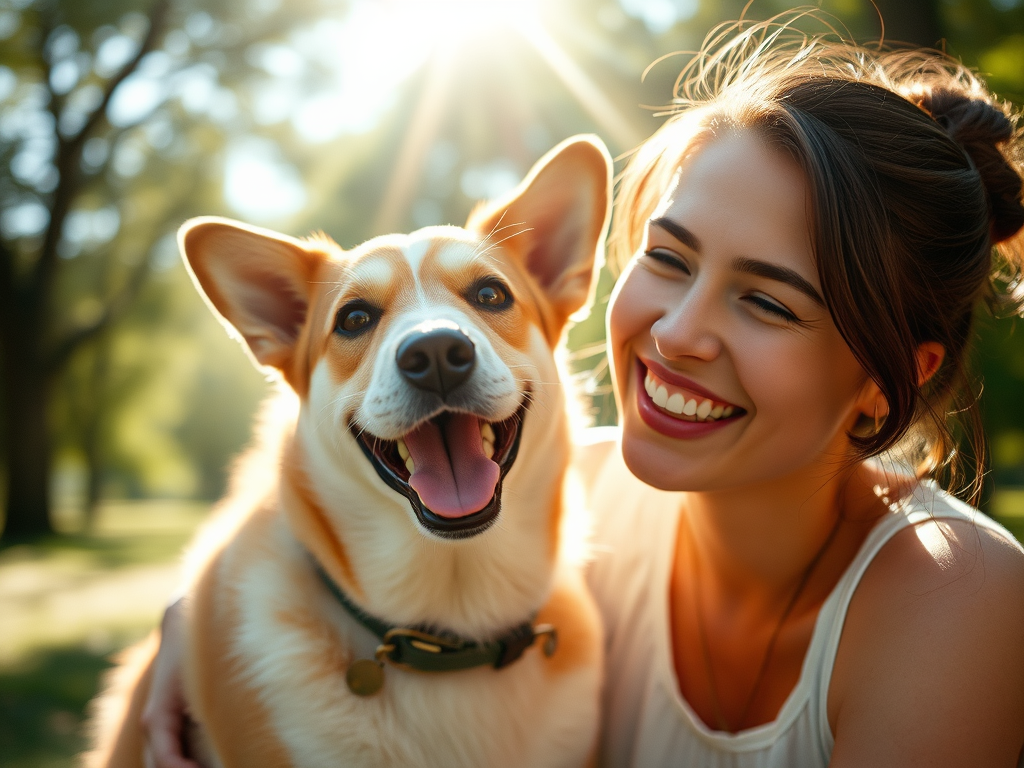
Welcome to a realm of limitless pawrenting possibilities. Each journey with your furry friend is as exhilarating as the destination. Every shared moment provides a chance to leave your unique paw print on the canvas of existence. You can craft stories filled with joy, laughter, and love. The only limit in this adventure is the extent of your imagination.
From the blog
Latest Posts
Welcome to a world of Pawrenting, where the thrills of shared experiences ignite joy and laughter. The journey is filled with adventures, as exhilarating as the destination, with each day bringing new opportunities for exploration. Start with early morning walks in the park. Then enjoy cozy afternoons spent cuddling on the couch. Every moment is a chance to connect with your furball. You can make memories that could last for a lifetime! As you navigate the ups and downs of pet parenthood, you’ll discover the unique bond that forms through play. Training and quiet times together further strengthen this bond. These experiences create a tapestry of unforgettable moments. They enrich both your lives.
-
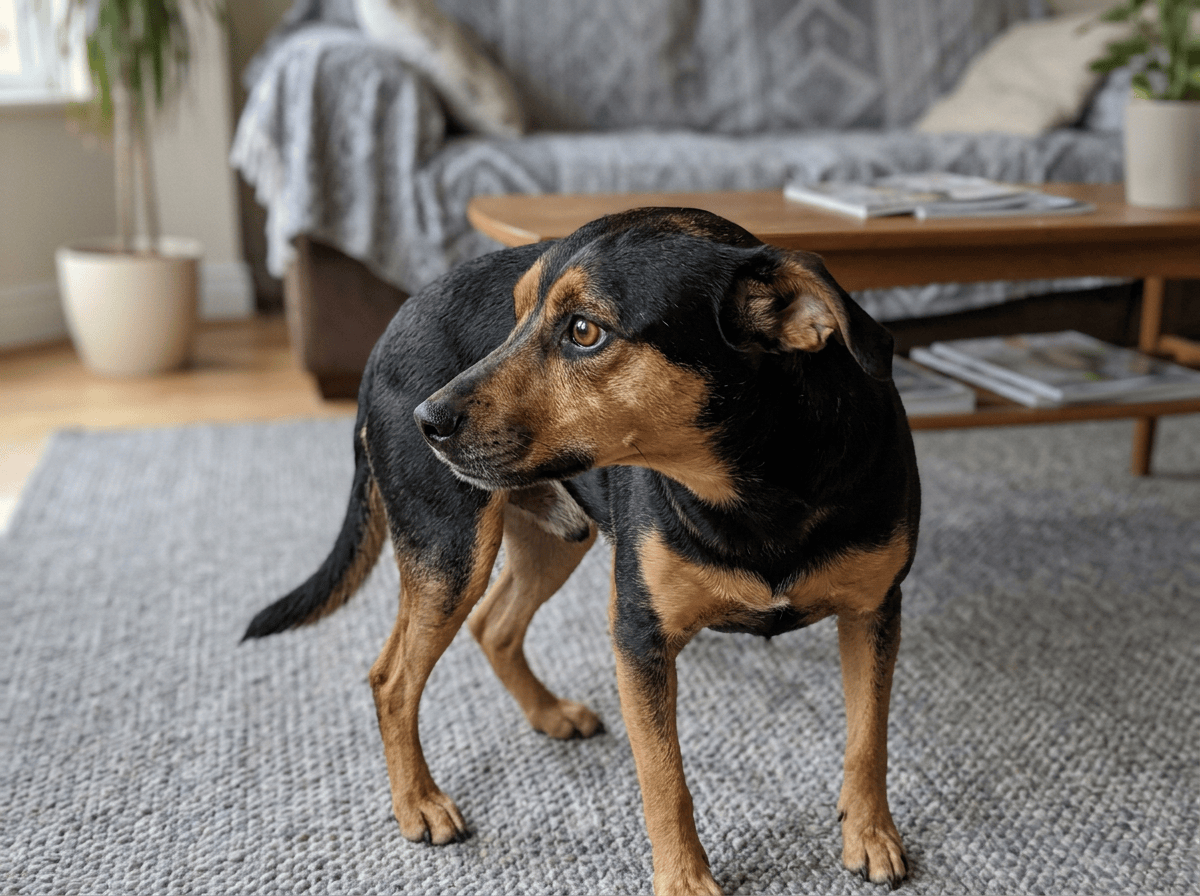
When we think of fear, we often look for the obvious: the growl, the snap, the cowering retreat into a dark corner. We think of a dog hiding under the bed during a thunderstorm or bolting at the sound of fireworks. But fear, through the eyes of a dog, is rarely that cinematic. It is not always a grand, dramatic production. More often than not, fear is a quiet, subtle language of shadows—a series of microscopic shifts in body posture and intent that humans, in our loud and fast-paced world, frequently miss.
To understand a dog’s fear, we must first understand that they inhabit a sensory reality far more intense than our own. Their world is woven from the vibrations of the earth, the chemical signatures of anxiety in the air, and a visual field that processes motion with startling acuity. When a dog is afraid, their world doesn’t just feel dangerous; it feels overwhelmingly loud.
The most profound realization I’ve had as a “pawrent” is that fear in dogs is often misinterpreted as stubbornness, aggression, or “bad behavior.” When a dog freezes on a walk, digging their heels into the concrete, we call it stubbornness. When they lip-lick repeatedly while a stranger reaches out to pat them, we might call it a sign of a “friendly” dog looking for food. In reality, these are the early, desperate warnings of a nervous system flooded with cortisol.
Look closely at the eyes. The “whale eye”—where the white of the eye becomes crescent-shaped and visible—is perhaps the most haunting indicator of canine anxiety. It is the look of a soul who is trying to maintain awareness of a threat while simultaneously praying they are invisible. It is a look of hyper-vigilance. When a dog displays whale eye, they are not being dramatic; they are telling us, in the only way they can, that they are overwhelmed.
For those of us who have welcomed rescue dogs into our lives, this language of shadows is even more poignant. Our rescues often arrive with invisible luggage—ghosts of past experiences that we can neither see nor hear. A sudden movement that looks harmless to us might resemble the motion of a raised hand they once feared. A specific smell—like antiseptic or exhaust—might trigger a physiological regression to a time of trauma. To them, the danger isn’t just in the present; it is a memory stitched into the fabric of their reality.
When we observe this fear, our instinct as humans is often to “fix” it. We want to hug them, to reassure them with a touch, to force them into the situation to “show them it’s okay.” But this is the fundamental disconnect. We are mammals who seek comfort through physical proximity; they are animals who, in moments of high terror, often seek space. When we crowd a fearful dog, we inadvertently trap them. We become another piece of the puzzle they cannot solve.
True empathy for a fearful dog requires us to become a “secure harbor.” It means becoming the calm in their storm rather than the storm itself. It means respecting their “threshold”—the invisible line where they can still think, learn, and breathe. If your dog is eating treats, they are likely under threshold. If they stop eating, refuse a high-value reward, or begin to pant heavily, they have crossed that line. They are no longer thinking; they are reacting. At that moment, no amount of training or coaxing will work. The only thing that works is distance.
Learning to speak this language of shadows changes the relationship entirely. When I learned to read Sauli’s subtle signals—the way her ears would pivot like radar dishes, the way her tail would stop its rhythmic wag to a gentle half-mast—I realized she wasn’t ignoring my commands; she was telling me the world was too big. By listening to those small, silent pleas, I gave her the one thing she needed most: autonomy.
There is a profound beauty in the healing of a fearful dog. It does not happen in a straight line. It is a slow, iterative process of building a reservoir of positive experiences that eventually outweighs the history of the bad ones. Every time a rescue dog chooses to turn their back on a “threat” and look to you instead, they are making a conscious choice to override their primal instincts. They are saying, I am afraid, but I trust you more than my fear.
That moment of trust is the highest compliment a human can receive. It is the reward for every patient minute spent sitting on the floor while they decide whether or not to approach. It is the payoff for every walk turned around early because the environment was too much. When we learn to see fear through their eyes, we stop being their master and start being their partner. We stop asking them to be brave for our sake, and instead, we become brave enough to protect them from a world that, to them, feels terrifyingly vast.
Fear is not a flaw in a dog’s character; it is a vital, protective mechanism that has kept their species alive for millennia. By honoring that fear rather than shaming it, we transform our dogs. We let them know that while the world may be big and loud and occasionally frightening, they do not have to navigate it alone. And in that partnership, the shadows eventually begin to retreat, replaced by the quiet, steady light of home.
-
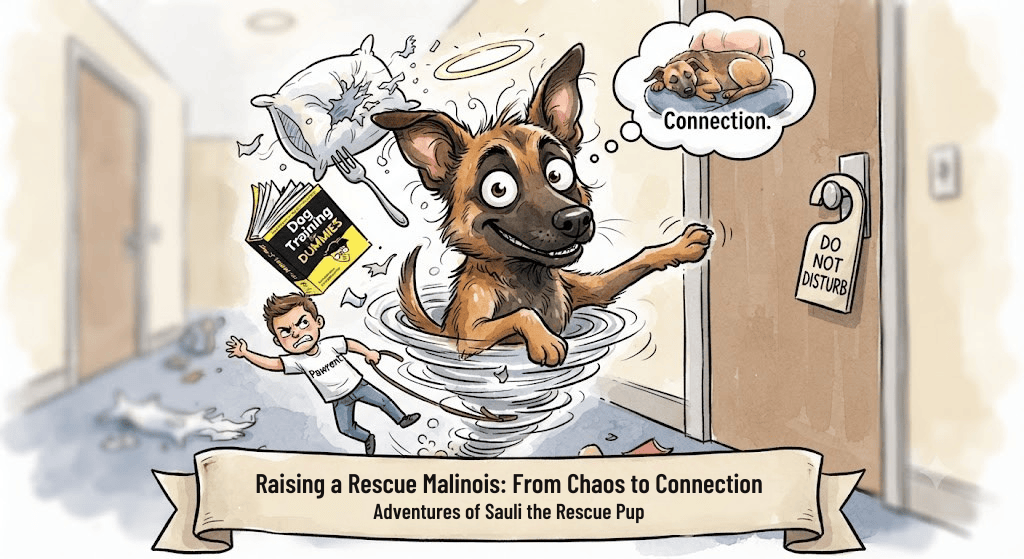
The Belgian Malinois is often described as a “Formula 1 car” in dog form—highly tuned, incredibly fast, and requiring a master driver to handle the curves. When that Formula 1 car comes from a rescue background, the challenge shifts from simple management to deep emotional restoration. Raising a rescue Malinois is not merely an act of pet ownership; it is a commitment to a living story that often begins with trauma, neglect, or the misfortune of being misunderstood.
The “Hotel Tornado” and the Reality of High Drive
Many potential adopters view rescue through a lens of human heroism, imagining a grateful, passive creature waiting to be saved. However, the reality of a Malinois like Sauli is often a “Hotel Tornado”. For a high-drive working breed, a new environment doesn’t always signal safety; it signals a new landscape to dominate or escape.
The early days are characterized by a “survival intelligence”. In Sauli’s case, this manifested as shredded pillows, escape attempts through hotel windows, and midnight “engineering” projects involving the manipulation of door locks. For the human on the other end of the leash, this phase requires a radical shift in perspective. You are not a savior; you are a partner in a storm. The “Hotel Tornado” is a physical manifestation of a dog trying to find its footing in a world that has previously been unreliable.
Decompression and Survival Intelligence
Unlike a puppy from a breeder, a rescue Malinois arrives with a complex history. Their intelligence is not just for learning commands; it is a tool for navigating uncertainty. During the decompression period, trust is earned in millimeters, not miles. A Malinois does not offer loyalty as a given; it is a hard-won treasure that emerges only when the dog decides the world is finally safe.
Phase of Integration Key Characteristics Human Requirement Decompression High anxiety, hyper-vigilance, “escape artist” tendencies. Patience, consistent boundaries, and low-stress environments. Testing Boundaries Exploration of “what is allowed,” testing locks, and “toy rebellions”. Firm, calm leadership without rigid aggression. Connection Resting the head on a lap, quiet observation, and seeking touch. Presence and the ability to slow down to the dog’s rhythm. The Shift from Obedience to Trust
One of the most profound lessons in raising a rescue Malinois is the distinction between obedience and trust. While the breed is capable of incredible feats of athleticism and command-following, the heart of a rescue dog lies in the moments when they choose to be present without a command.
Sauli’s journey from a “tiny black puppy with ears too large for her head” to a confident companion in San Francisco highlights this transition. The moment Sauli finally rested her head on her human’s lap after a weekend of mischief was not a result of “saving” her; it was the result of surviving the chaos together. For a Malinois, trust is built through shared adventure and the realization that their human can handle the “tornado” without breaking.
The Mutual Contract of Rescue
Ultimately, raising a rescue Malinois is a mutual contract. The human provides a roof, a name, and a consistent bowl of kibble, but the dog provides a sense of purpose and a masterclass in resilience. They force their humans to trade rigid schedules for the rhythm of a wet nose and a wagging tail, moving them from a life of sterile order to one of beautiful, chaotic meaning.
The transformation of a scared rescue pup into a confident companion is a slow, methodical process. It requires the human to become more patient, more present, and more resilient than they ever were before. As the dog finds their “forever home,” the human often finds a version of themselves that was previously hidden under the weight of schedules and stresses.
If you are considering this path, prepare for the “Hotel Tornado,” but stay for the quiet, tender moment when a high-drive athlete finally decides that your lap is the safest place on earth.
-
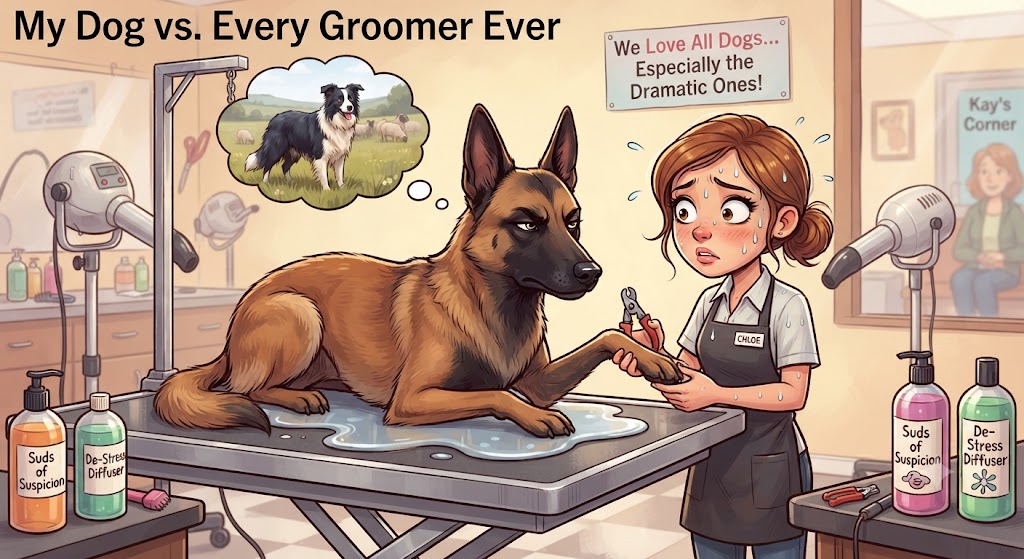
The battleground is usually small, smelling faintly of shampoo and anxiety, and vibrating with the high-pitched whine of professional dryers. To most dogs, a trip to the groomer is a spa day—a luxurious, if slightly confusing, indulgence. To my Belgian Malinois, Sauli, it is an epic confrontation. It is the clash of the titans: a high-drive, suspicious-of-authority canine versus the gentle, patience-of-a-saint professional who just wants to clip some nails.
The pre-game ritual is where the tension begins. Sauli, an expert in reading the room, knows the difference between a “fun car ride” (to the park) and “The Trip” (to the groomer). The moment I reach for her specialized harness—the one that implies we are going somewhere she might be handled by someone else—she vanishes. She becomes a ghost, a tactical retreat expert who can melt into the shadows of the hallway or wedge herself firmly behind the sofa, giving me a look that screams, “I don’t know who you are, but you are not my human today.”
When I finally manage to extract her and buckle her into the car, the silence in the vehicle is heavy. There is no tail wagging. There is no head out the window to catch the breeze. There is only the intense, brooding stare of a dog who is convinced she is being driven to a place where her dignity will be stripped away, one bristle brush stroke at a time.
Arriving at the groomer is the start of the tactical maneuvering. The groomers, bless their hearts, are usually lovely people who coo, “Oh, what a pretty girl!” Sauli, being a Belgian Malinois, does not want to be a pretty girl. She wants to be a working dog. She wants to be in the field. She does not want to be put on a raised metal table that feels suspiciously like an interrogation station.
I watch from the waiting area as the drama unfolds. The first phase is the “Dramatic Sigh.” Sauli will lower her body until her belly touches the table, refusing to move, looking like a discarded fur coat. When the groomer tries to lift her paw to trim a nail, Sauli goes limp. She becomes a liquid dog. She is the master of non-violent resistance. She doesn’t bite, she doesn’t growl—she simply ceases to cooperate with the laws of physics. She becomes dead weight, her entire soul focused on making herself impossible to manipulate.
Then, there is the “Eye Contact.” Sauli has an incredibly intense gaze. It’s the gaze she uses for sheep, for tennis balls, and apparently, for unsuspecting groomers. She will stare at the groomer with a look that says, “I am a descendant of working shepherds. I have seen the harsh plains of Belgium. I have run for miles. And now, you are touching my ears with cotton swabs? Do you have any idea how ridiculous this is?”
I’ve had more than one groomer come back to me after the session with a bead of sweat on their brow. “She’s… very expressive,” one told me, clearly trying to be diplomatic. “She’s very strong-willed,” said another. I know what they mean. They mean she spent the entire hour testing their patience, questioning their methods, and looking at them like they were the most incompetent humans on the planet.
But here is the irony: once the process is over, Sauli trots out to me looking pristine, smelling like lavender and joy. She shakes off the “humiliation,” does a quick zoomie around the parking lot, and suddenly, the ordeal is forgotten. She is back to her cheerful, bouncy self, ready for the next adventure.
The reality, of course, is that Sauli doesn’t actually hate the groomers. She just hates not being the one in control. She is a dog who thrives on partnership, on working together, and on high-stakes tasks. A bath and a trim feel like a passive activity, a loss of agency. She doesn’t want to receive care; she wants to do things.
This ongoing battle—my dog versus the groomer—is really just a reflection of her personality. It’s not about malice; it’s about a dog who has always viewed the world as a place to be conquered or collaborated with, never just a place to sit still and be touched. And while I do apologize profusely every time I hand her off at the counter, there is a small, secret part of me that admires her for it. She is unapologetically herself, even on the grooming table. She demands respect, she challenges the process, and she makes sure that every professional who touches her remembers her name.
So, to every groomer who has successfully managed to bathe, brush, and trim my Belgian Malinois: you have my eternal gratitude. You aren’t just groomers; you are brave, patient, dog-whispering heroes. And as for Sauli? I’ll keep bringing her back—not because she enjoys it, but because as much as she loves to put up a fight, she’s actually quite the drama queen who secretly enjoys the attention. Even if she would never, ever admit it.

