
Our Stories
Welcome to a realm of limitless pawrenting possibilities. Each journey with your furry friend is as exhilarating as the destination. Every shared moment provides a chance to leave your unique paw print on the canvas of existence. You can craft stories filled with joy, laughter, and love. The only limit in this adventure is the extent of your imagination.
From the blog




Latest Posts
Welcome to a world of Pawrenting, where the thrills of shared experiences ignite joy and laughter. The journey is filled with adventures, as exhilarating as the destination, with each day bringing new opportunities for exploration. Start with early morning walks in the park. Then enjoy cozy afternoons spent cuddling on the couch. Every moment is a chance to connect with your furball. You can make memories that could last for a lifetime! As you navigate the ups and downs of pet parenthood, you’ll discover the unique bond that forms through play. Training and quiet times together further strengthen this bond. These experiences create a tapestry of unforgettable moments. They enrich both your lives.
-

A Book Made Her Real to Dad
For years, I lived inside a contradiction I did not know how to explain. I had built a life that demanded intelligence, discipline, and endurance, yet somehow, to my father, none of it felt real. I could work for years, solve problems, survive pressure, and build an entire professional identity brick by invisible brick, but because the work lived in screens, systems, and abstractions, it seemed to him like smoke. He came from a world of tangible things. In his eyes, real work had weight. It made noise. It left dust on your hands. It stood in concrete, steel, gears, and bridges. My life, no matter how hard-earned, did not speak that language.
So I kept trying to translate myself.
I tried through effort. I tried through achievement. I tried through endurance. I tried by becoming more competent, more accomplished, more articulate, as though one more success might finally become legible to him. But there is a peculiar sorrow in being loved by someone who cannot fully recognize the shape of your life. It is not always rejection in the dramatic sense. Often it is quieter than that. It is being looked at with affection and still feeling unseen.
My father did not hate what I had become. I do not think that. He simply could not locate it in the framework he trusted. To him, value was tied to what could be touched, pointed to, explained in plain physical terms. He believed in what could be built with the hands and measured in visible outcomes. I had spent years building a life in a realm he viewed as distant, fleeting, and perhaps even suspect. In that gap between us lived frustration, misunderstanding, and a grief I rarely named.
Then, somehow, a book did what I could not.
It still amazes me to admit that. After all the years of trying to justify my path through conversation, credentials, and persistence, it was a book that made something shift. A book was tangible in a way my earlier life had not been. It could be held. It could be opened. It had pages, weight, a cover, a spine. It entered his world not as an argument, but as an object. And because it was an object, it became evidence.
But the change was not only in the book’s physical form. It was also in what the book contained. It carried my voice in a way that no résumé ever could. It revealed not just what I had done, but who I was. On those pages lived my observations, my emotional truth, my humor, my wounds, my persistence, my way of making meaning out of chaos. The book did not merely prove that I could produce something tangible. It gave my father access to an inner life I had perhaps never fully shown him.
That is what I mean when I say the book made me real to Dad.
Not that I was unreal before, but that I became visible in a new language. I became readable. He could finally encounter me in a form he respected. The page became a bridge where conversation had failed. Through the book, I was no longer only the daughter whose choices confused him, or the professional whose work seemed too abstract to trust. I became a person who had made something concrete from experience, pain, thought, and survival.
There is something both beautiful and heartbreaking about that realization. Beautiful, because connection finally became possible in a way I had longed for. Heartbreaking, because part of me wonders why I had to turn my life into an object to be fully seen. Why was my living not enough? Why was my becoming not proof on its own?
I do not ask those questions with bitterness alone. I ask them with tenderness, too. Parents inherit their own languages of value. They do not invent them from nothing. My father’s understanding of reality was shaped by the world that formed him—a world where survival and dignity often depended on visible labor, practical achievement, and certainty. He trusted what he could hold because life had taught him to. And perhaps I, too, wanted something from him that he did not know how to give until I met him halfway in the language of tangibility.
The book became that meeting place.
In its pages, I was not asking him to understand the invisible architecture of my old life. I was offering him something solid. But more than that, I was offering him myself, distilled. The book said: this is what I have carried. This is how I have hurt. This is how I have seen the world. This is what I have made from what nearly broke me. And for perhaps the first time, he could receive it without needing to translate it into his own categories first.
I think many daughters know this ache—the longing not just to be loved, but to be recognized. Love without recognition can feel incomplete, like sunlight behind glass. You know it is there, but something does not fully reach you. To be made real to a parent is not merely to earn approval. It is to feel that your inner world has been granted existence in their eyes.
When that finally happened, I did not feel triumphant. I felt quiet. Softened. A little sorrowful for all the years that came before it. But also grateful. Because sometimes healing does not arrive as a grand reconciliation. Sometimes it arrives as a subtle shift in gaze. A pause. A new respect. A different kind of listening.
A book made me real to Dad because it gave form to what had always existed but had never fully landed between us. It turned the invisible visible. It gave weight to a life he could not previously hold. And in doing so, it reminded me of something essential: that making meaning from one’s life is not only an act of self-expression. Sometimes, unexpectedly, it is also an act of translation. A way of saying, across generations and misunderstandings: Here I am. This is my shape. Can you see me now?
And this time, I think he could.
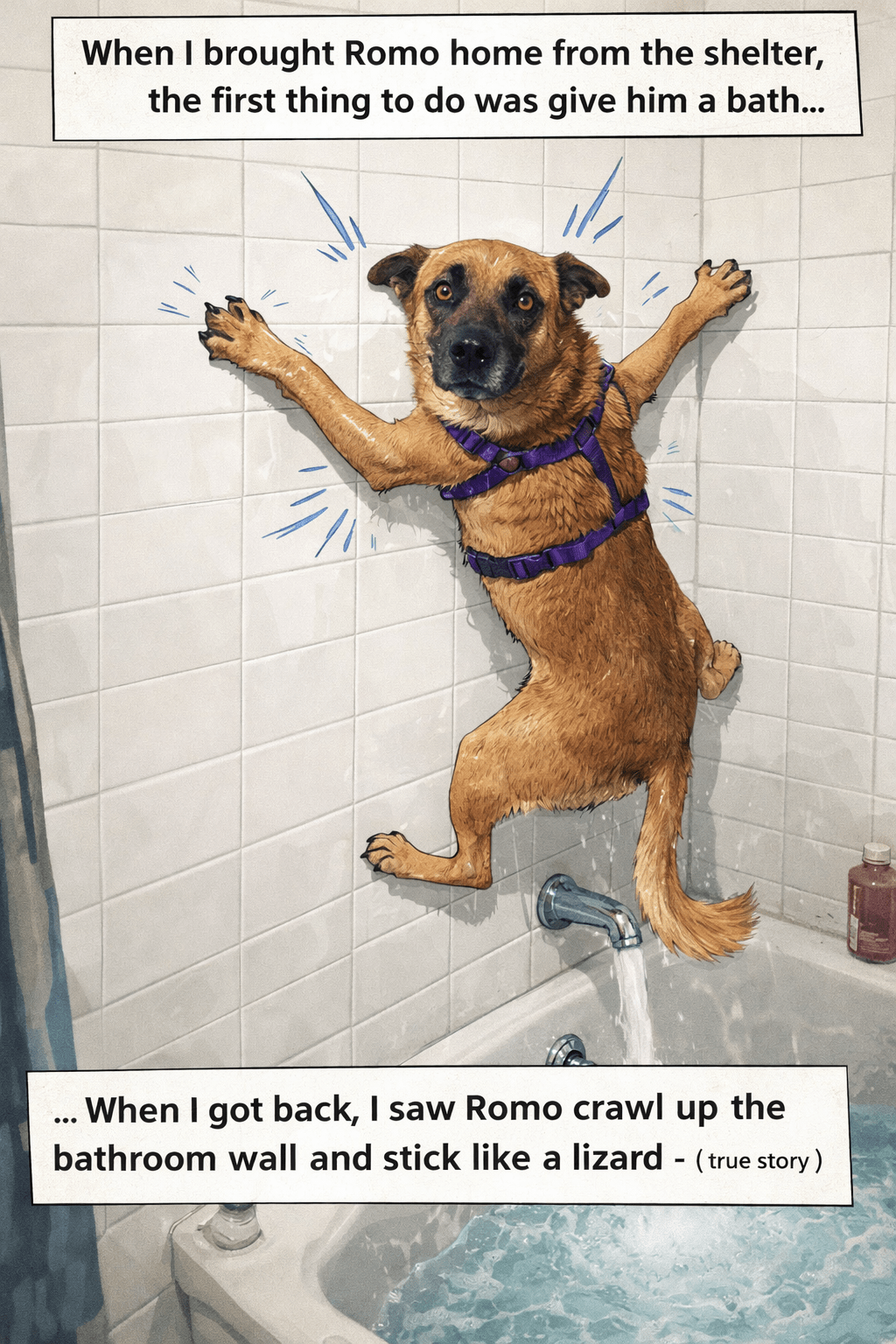
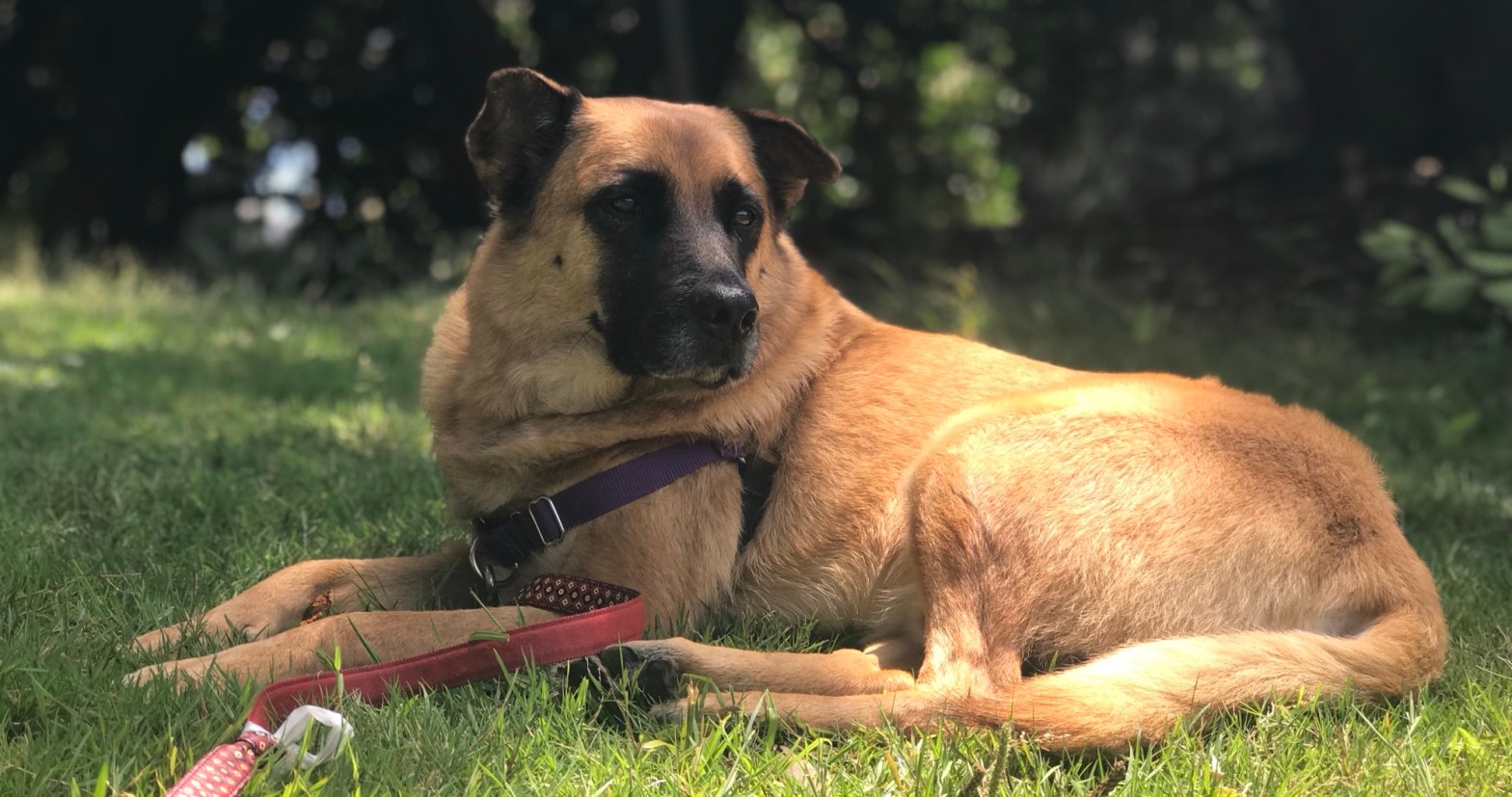
Listen to the full episode on Tech Lay-offs and Belgian Malinois on The Pawrenting Company Podcast!

-

Did She Have To Lose Everything?
I used to think loss arrived with clarity. I thought it would announce itself loudly, take what it came for, and leave me with a clean outline of grief to study. But that is not how it happened. What I lost did not vanish all at once. It unraveled slowly, almost politely, until one day I looked around and realized the life I had built no longer recognized me.
So I ask the question often, sometimes in anger and sometimes in awe: Did she have to lose everything?
I ask it as if I am speaking about someone else, some distant woman in a story I might pity. But the truth is, I am asking about myself. I am asking whether the collapse was necessary. Whether the breaking was cruel coincidence or some brutal form of instruction. Whether I could have become who I am now without first being stripped of who I thought I was.
There was a time when I measured my life by what could be named and displayed. Achievement gave me shape. Plans gave me direction. The approval of others gave me a feeling I mistook for safety. I collected expectations and wore them so well that even I forgot they were costumes. From the outside, my life may have seemed full. But fullness is not always the same as truth. Sometimes a life looks complete only because there is no visible room left for the self.
When the losses began, I did not greet them with wisdom. I greeted them with resistance. I mourned every version of the future that disappeared. I clung to identities that no longer fit. I begged life, in all the silent ways a person can beg, to return me to what was familiar. I did not want transformation. I wanted restoration. I wanted my old certainties handed back to me, untouched.
But loss is not sentimental. It does not always return what it takes. Sometimes it comes to expose the fragile scaffolding beneath the life we have been calling our own.
Losing what I depended on forced me to confront how much of myself had been outsourced—to work, to relationships, to ambition, to being needed, to being admired, to the comfort of knowing exactly how to introduce myself. When those things fell away, I felt humiliated by my own emptiness. I wanted to believe I had lost too much. Yet what frightened me most was not the absence of those things, but the possibility that I had never learned how to exist without them.
That is the quiet violence of loss: it does not only take what you love. It reveals what you built your life upon.
And still, I resist the romance of suffering. I do not want to glorify devastation as if pain is the only worthy teacher. I do not believe every wound is noble, or that every collapse arrives with hidden purpose neatly tucked inside it. Some losses are simply losses. Some griefs never become wisdom. Some endings leave scars without offering revelation.
And yet, if I am honest, I cannot deny that losing so much changed the terms of my life. It interrupted the performance. It dismantled the illusion that worth could be secured through success or permanence or being chosen. It left me with fewer places to hide. In that stripped-down landscape, I met myself differently—not as an achievement, not as a role, not as a promise waiting to be fulfilled, but as a person. Frightened, unfinished, grieving, still here.
Maybe that is why the question remains so difficult. Did she have to lose everything? I still do not know. Perhaps not everything was necessary. Perhaps some of it was waste. Perhaps some of it was preventable. But I know this: what was lost made visible what could not survive the truth. And what remained, though shaken, was more honest than what came before.
I began to understand that survival is not always dramatic. Sometimes it is quiet. Sometimes it looks like getting out of bed when no larger story is available to rescue the day. Sometimes it looks like releasing the need to make the pain meaningful before allowing it to be real. Sometimes it is simply the refusal to abandon yourself when life has already taken so much.
There is a version of me that still grieves the woman who thought she could keep everything by being good enough, careful enough, useful enough. I have tenderness for her now. She was trying to build a life that would not betray her. She did not know that control can be its own kind of fragility. She did not know that what is built on fear of loss is already half lost.
If I have learned anything, it is that losing everything and losing what can no longer hold you are not always the same thing. At the time, they feel identical. Both leave you emptied. Both leave you raw. But one is annihilation, and the other—though it never feels merciful in the moment—may be the beginning of a more truthful life.
So did she have to lose everything?
I cannot answer with certainty. But I know that after the loss, there was no applause, no revelation waiting under a spotlight, no instant rebirth. There was only the slow, sacred work of meeting myself without the old disguises. There was the task of learning that I was still worthy in the absence of what once defined me. There was the difficult grace of becoming a person rather than a performance.
Maybe that is the only answer I have.
She lost much more than she should have.
But in the ruins, she found what could not be taken.
Listen to the full episode on Tech Lay-offs and Belgian Malinois on The Pawrenting Company Podcast!

-

Presence Without Performance
For much of my life, I confused being seen with being known. I believed that if I could present myself well enough—competent enough, successful enough, agreeable enough—then I would earn belonging. I learned how to perform reliability, intelligence, composure, and even warmth in ways that made me acceptable to the world around me. On the surface, this seemed like maturity. It looked like ambition. It looked like strength. But underneath it was exhaustion: the quiet, constant labor of managing how I appeared rather than living as I truly was.
Presence without performance feels, to me, like the slow unlearning of that habit.
It is the decision to remain in my own life without turning every interaction into an audition. It means resisting the urge to polish every emotion before I express it, to convert every wound into wisdom before I am allowed to speak of it, or to make my struggles digestible so that others will be more comfortable receiving them. Presence asks something harder and more honest of me. It asks me to stay.
To stay with discomfort. To stay with uncertainty. To stay with myself even when I do not have a neat explanation, a graceful lesson, or a redeeming conclusion.
There is a kind of loneliness that comes from performing for too long. It is the loneliness of being praised for a version of yourself that feels only partially real. People may admire what you project, but admiration is not the same as intimacy. Intimacy begins where performance ends. It begins when I allow myself to be witnessed without control—to be human without editing every sentence, every feeling, every flaw.
This does not mean abandoning dignity or honesty. It does not mean making a spectacle of pain or rejecting growth. Instead, it means learning that I do not have to be exceptional to be present. I do not have to be impressive to be worthy of love. I do not have to convert my life into a narrative of constant productivity and resilience just to justify my place in the room.
Presence without performance is especially difficult in a world that rewards branding over being. Everywhere I look, there is pressure to package the self: to appear healed, certain, efficient, desirable, and unfailingly articulate. Even vulnerability can become a kind of curated theater when it is offered only in polished, socially acceptable forms. I have felt that pressure in my own life—the temptation to narrate myself in ways that are easier to applaud than to truly understand.
But real presence is quieter than applause. It lives in ordinary, unadorned moments: in telling the truth without dramatic effect, in listening without preparing a better reply, in sitting beside someone without needing to fix them, in admitting I am tired without apologizing for my limits. Presence is not passive. It is an act of courage. It asks me to show up without the armor of presentation.
I think this kind of presence begins with self-acceptance. If I am constantly divided between what I feel and what I think I should display, then I cannot fully inhabit my own life. I become a manager of impressions, split between the private self and the performed self. But when I stop demanding perfection from myself, I create room for something gentler and more whole. I become less concerned with how I am being received and more committed to being real.
In that reality, there is freedom. I no longer have to earn rest by proving my exhaustion. I no longer have to make my pain poetic before it counts. I no longer have to be inspirational in the middle of becoming. I can simply be a person: unfinished, sincere, learning. And strangely, it is there—in the absence of performance—that I feel most connected to others. Because what people often need most is not a flawless example, but an honest presence.
To live this way is not easy. Performance is seductive because it offers protection. It creates distance between the self and rejection. If people dislike the performance, I can tell myself they never touched the real me. But that protection comes at a cost. It also keeps love at a distance. It keeps comfort partial, relationships conditional, and belonging fragile.
Presence without performance asks me to risk being known.
It asks me to believe that my worth does not begin at excellence, that tenderness is not weakness, and that the most meaningful forms of connection are built not through perfection, but through sincerity. It reminds me that I do not need to arrive in fullness to deserve care. I do not need to be constantly becoming someone more acceptable. I can meet the moment as I am.
And perhaps that is what presence really is: the refusal to abandon myself in order to be loved. The willingness to inhabit my own truth without embellishment. The quiet practice of bringing my full, imperfect humanity into the room and trusting that it is enough.
Not dazzling. Not polished. Not performed.
Just real.
Watch the latest episode, Tech-Layoffs and Belgian Malinois of The Pawrenting Company Podcast!
 Let Your Pawrenting Journey Begin