
Animal sanctuaries are often imagined as peaceful places filled with happy rescues and heartwarming reunions.
But behind every successful sanctuary is a reality far more demanding.
It is a world built on emergency calls at 2 a.m., overcrowded recovery rooms, nonstop feeding schedules, critical surgeries, and volunteers who rarely get a day off.
For organizations like Krishna Ashram in the Delhi NCR region, compassion is not an occasional act.
It is a 24/7 responsibility.
At The Pawrenting Company, we believe sanctuaries like these represent one of the purest forms of commitment in animal welfare.
Every Day Begins with Uncertainty
No two days inside a rescue sanctuary are ever the same.
A normal morning can quickly turn into a crisis.
An injured street dog may arrive after a traffic accident.
A litter of abandoned puppies may need emergency bottle feeding.
A senior rescue may require immediate medical intervention.
A foster placement may unexpectedly fall through.
Sanctuary teams must constantly adapt.
The emotional and logistical demands are relentless.
And unlike many professions, rescue work does not pause on weekends or holidays.
Animals still need medication.
They still need feeding.
They still need emotional rehabilitation.
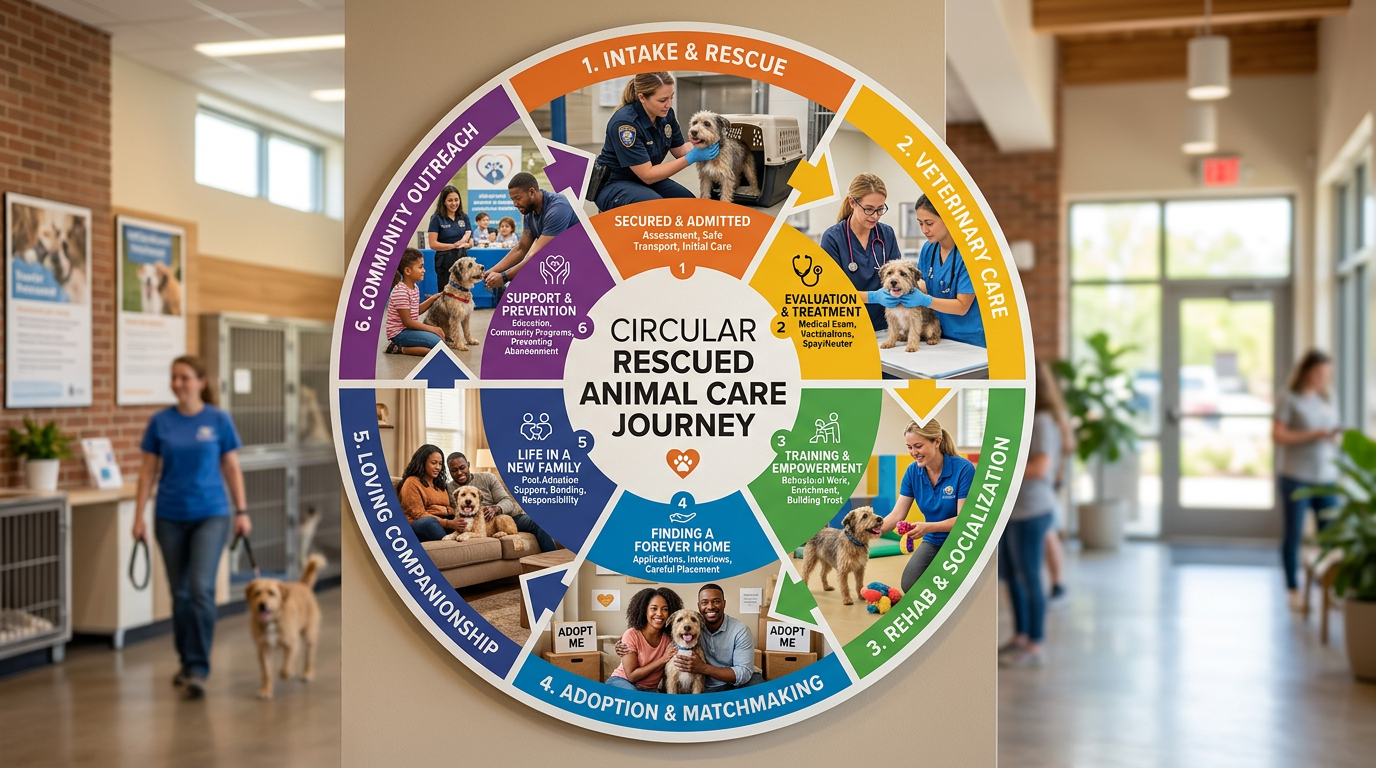
Beyond Rescue: The Full Spectrum of Care
Rescue is only the beginning of an animal’s journey.
Many animals arriving at sanctuaries are traumatized, malnourished, injured, or fearful of human interaction.
True rehabilitation requires time.
Sanctuary teams often provide:
- Emergency medical care
- Post-surgical recovery
- Long-term rehabilitation
- Behavioral support
- Vaccinations and sterilization
- Foster coordination
- Adoption screening
- Lifelong sanctuary care for animals unable to be adopted
This level of support requires extraordinary patience.
Some animals recover quickly.
Others may need months—or even years—to trust again.
The Emotional Weight of Rescue Work
One of the least visible aspects of sanctuary life is emotional exhaustion.
Caregivers form deep bonds with the animals they rescue.
They celebrate every recovery.
They grieve every loss.
They carry the emotional burden of witnessing suffering while still needing to remain functional enough to help the next animal arriving at the gate.
And despite the challenges, most rescuers continue because they know the alternative is worse.
Without sanctuaries, countless animals would have nowhere safe to go.
Why Sanctuaries Matter So Deeply
Urban environments create particularly difficult conditions for stray animals.
Rapid development, traffic, pollution, overcrowding, abandonment, and limited public awareness all contribute to high-risk environments.
Sanctuaries act as critical safety nets within these ecosystems.
They provide:
- Immediate protection
- Medical intervention
- Rehabilitation spaces
- Adoption pathways
- Long-term refuge for vulnerable animals
In many cases, they are the only place an injured or abandoned animal can survive.
Compassion as Daily Practice
What makes sanctuaries extraordinary is not perfection.
It is persistence.
It is the decision to keep showing up despite limited funding, emotional burnout, and endless emergencies.
At The Pawrenting Company, we believe these spaces embody what compassion truly looks like in practice.
Not as a feeling.
But as a daily action.
Because somewhere tonight, while most of the world sleeps, a rescue worker will still be awake, comforting a frightened animal who finally feels safe.
 Let Your Pawrenting Journey Begin