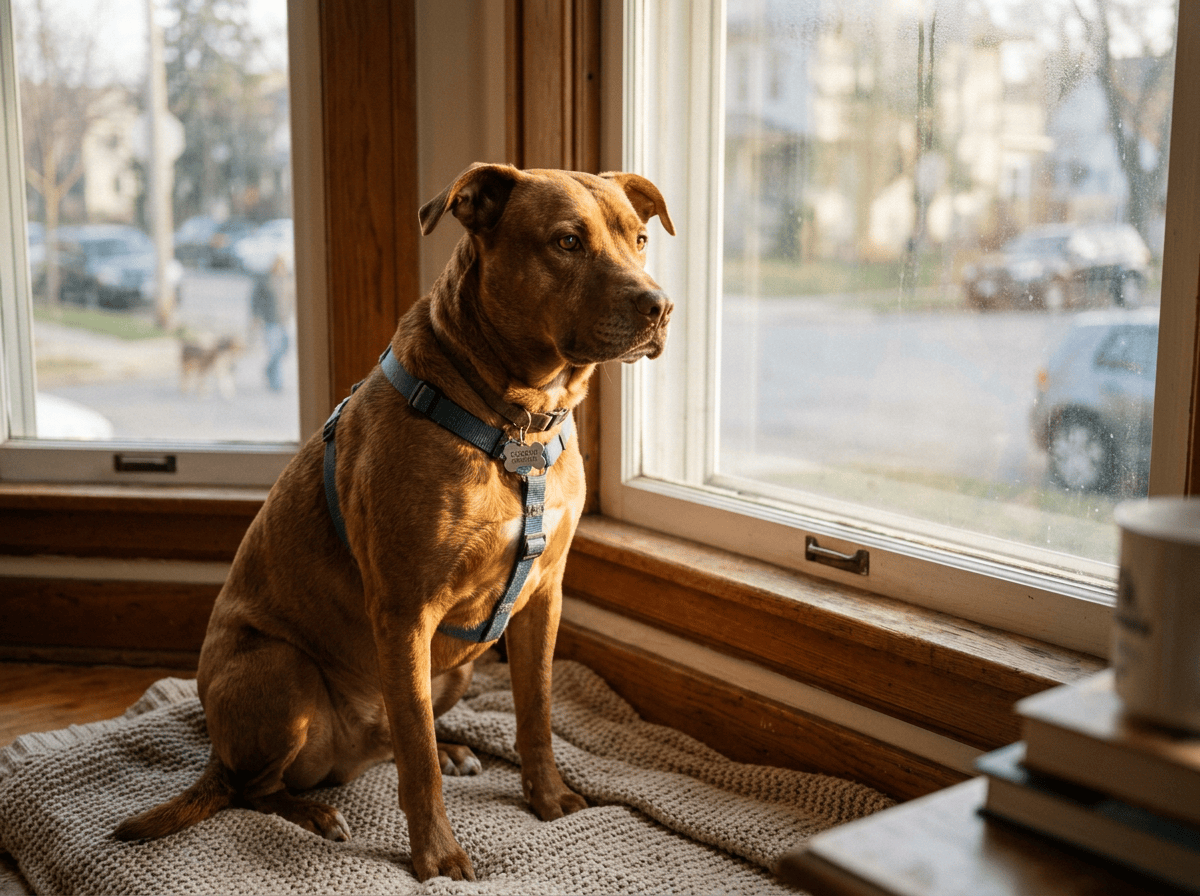
There is a quiet, profound magic in the rhythm of a dog’s life that often goes unnoticed until we find ourselves in the depths of our own quiet desperation. We tend to view our pets as companions, as playmates, or perhaps as convenient additions to our busy lives. But for those of us who have walked the path of rescue, we know that the relationship is far more surgical. It is a slow, steady reconstruction of the heart, where every tail wag, every soft exhale against our hand, and every silent, soulful look serves as a stitch in the fabric of our own healing. Healing, as it turns out, does not arrive in a dramatic, lightning-strike epiphany; it happens one tail wag at a time.
When I brought Sauli into my life, I was operating under the arrogant assumption that I was a benefactor. I had a warm apartment, a steady supply of kibble, and the resources to provide a “good life.” I viewed rescue as a one-way street: I would save her from the uncertainty of her past, and in return, I would receive the expected quota of puppy affection. I did not realize that I was carrying a different kind of baggage—a chronic, low-grade stress, a disconnection from the present moment, and a heart that had become guarded against the messy, unpredictable nature of vulnerability. I thought I was teaching a puppy how to live in a house; I was actually being taught how to inhabit my own life.
The early days of rescue are rarely the cinematic montage of golden hour play sessions. They are messy. They are exhausting. They are filled with “Hotel Tornado” moments—shredded pillows, frantic escape attempts, and the overwhelming realization that you are responsible for a living, breathing soul that doesn’t yet know if it can trust you. In those moments of frustration, when the carpet has been chewed and the schedule I so rigidly clung to has been pulverized, the impulse is to retreat. We want to regain control. We want the dog to be “fixed” so we can move on with our lives.
But the dog, specifically the rescue dog, refuses to play by these rules. They exist entirely in the present, a place where humans struggle to dwell. If you are angry, they feel it. If you are anxious, they mirror it. If you are pretending to be okay, they see through the performance. They force you to dismantle the facade. This is the first step of healing: the removal of the mask. To be a pawrent is to be constantly observed by a creature who requires nothing from you but your authenticity. You cannot hide your sadness or your irritability from a dog; you can only work through it.
As the days turned into weeks, and weeks into months, I began to notice the shift. It was subtle, barely perceptible. It wasn’t that my life suddenly became free of stress, but rather that my reaction to that stress began to change. When the world felt heavy, Sauli would nudge my hand with her nose—a simple, grounding action that demanded I break my train of thought. It was a gentle invitation to exit the labyrinth of my own mind and return to the physical world. Her tail, wagging with a rhythmic, predictable sincerity, became a metronome for my own nervous system.
This is the biology of healing. Studies have long told us that petting a dog lowers our blood pressure and reduces cortisol, but the experience is more philosophical than chemical. A tail wag is an expression of pure, unadulterated presence. It says, “I am here. You are here. We are safe.” In a world that constantly demands we look toward the future with anxiety or toward the past with regret, the rescue dog acts as an anchor. They remind us that the only moment we ever truly possess is the one happening right now—the one where we are sitting on the rug, breathing the same air, existing in a shared space of trust.
We often think of healing as the process of returning to who we were before we were hurt. But rescue teaches us that healing is actually about becoming someone entirely new—someone who is more patient, more resilient, and more capable of receiving love. When you earn the trust of a dog who has known fear, you are witnessing the absolute limit of what the heart can survive and still remain soft. You are watching a transformation that is not linear. It happens in moments. It happens when a nervous dog finally decides to eat while you are watching, or when they choose to sleep at your feet rather than hide under the bed. It happens in the tiny, microscopic victories.
These moments are the tail wags. They are the small, repetitive gestures of affirmation that collectively rewrite our inner narratives. If a creature who has seen the worst of humanity can still find the courage to offer a wag, to offer a lick, to offer their presence, then surely we can find the courage to face our own challenges. We are not just caring for them; we are engaging in a mutual contract of redemption. We provide the shelter, and they provide the perspective.
Ultimately, the rescue dog is the mirror we never knew we needed. They reflect our best selves back to us—the version of us that is capable of infinite patience and unconditional care. They strip away the pretenses we use to survive the day and remind us of the simple joy of being alive. If you are feeling broken, if you are feeling lost in the static of a complicated life, do not look for a grand solution. Look to the floor. Look to the quiet, steadfast companion who is waiting for nothing more than your acknowledgment. Healing is not a destination. It is a slow, quiet process, built on trust, tested by chaos, and perfected by the simple, unwavering companionship found in one tail wag at a time.
 Let Your Pawrenting Journey Begin