When we think of fear, we often look for the obvious: the growl, the snap, the cowering retreat into a dark corner. We think of a dog hiding under the bed during a thunderstorm or bolting at the sound of fireworks. But fear, through the eyes of a dog, is rarely that cinematic. It is not always a grand, dramatic production. More often than not, fear is a quiet, subtle language of shadows—a series of microscopic shifts in body posture and intent that humans, in our loud and fast-paced world, frequently miss.
To understand a dog’s fear, we must first understand that they inhabit a sensory reality far more intense than our own. Their world is woven from the vibrations of the earth, the chemical signatures of anxiety in the air, and a visual field that processes motion with startling acuity. When a dog is afraid, their world doesn’t just feel dangerous; it feels overwhelmingly loud.
The most profound realization I’ve had as a “pawrent” is that fear in dogs is often misinterpreted as stubbornness, aggression, or “bad behavior.” When a dog freezes on a walk, digging their heels into the concrete, we call it stubbornness. When they lip-lick repeatedly while a stranger reaches out to pat them, we might call it a sign of a “friendly” dog looking for food. In reality, these are the early, desperate warnings of a nervous system flooded with cortisol.
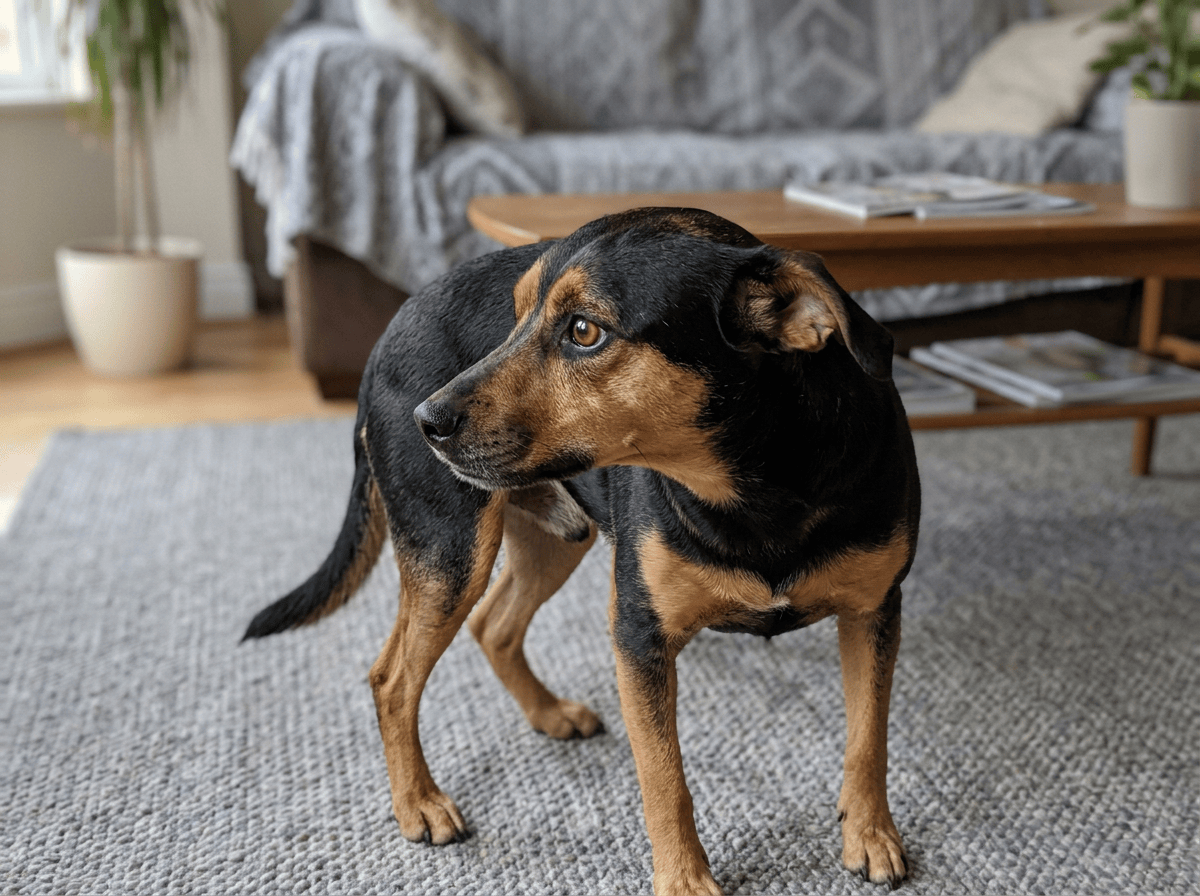
Look closely at the eyes. The “whale eye”—where the white of the eye becomes crescent-shaped and visible—is perhaps the most haunting indicator of canine anxiety. It is the look of a soul who is trying to maintain awareness of a threat while simultaneously praying they are invisible. It is a look of hyper-vigilance. When a dog displays whale eye, they are not being dramatic; they are telling us, in the only way they can, that they are overwhelmed.
For those of us who have welcomed rescue dogs into our lives, this language of shadows is even more poignant. Our rescues often arrive with invisible luggage—ghosts of past experiences that we can neither see nor hear. A sudden movement that looks harmless to us might resemble the motion of a raised hand they once feared. A specific smell—like antiseptic or exhaust—might trigger a physiological regression to a time of trauma. To them, the danger isn’t just in the present; it is a memory stitched into the fabric of their reality.
When we observe this fear, our instinct as humans is often to “fix” it. We want to hug them, to reassure them with a touch, to force them into the situation to “show them it’s okay.” But this is the fundamental disconnect. We are mammals who seek comfort through physical proximity; they are animals who, in moments of high terror, often seek space. When we crowd a fearful dog, we inadvertently trap them. We become another piece of the puzzle they cannot solve.
True empathy for a fearful dog requires us to become a “secure harbor.” It means becoming the calm in their storm rather than the storm itself. It means respecting their “threshold”—the invisible line where they can still think, learn, and breathe. If your dog is eating treats, they are likely under threshold. If they stop eating, refuse a high-value reward, or begin to pant heavily, they have crossed that line. They are no longer thinking; they are reacting. At that moment, no amount of training or coaxing will work. The only thing that works is distance.
Learning to speak this language of shadows changes the relationship entirely. When I learned to read Sauli’s subtle signals—the way her ears would pivot like radar dishes, the way her tail would stop its rhythmic wag to a gentle half-mast—I realized she wasn’t ignoring my commands; she was telling me the world was too big. By listening to those small, silent pleas, I gave her the one thing she needed most: autonomy.
There is a profound beauty in the healing of a fearful dog. It does not happen in a straight line. It is a slow, iterative process of building a reservoir of positive experiences that eventually outweighs the history of the bad ones. Every time a rescue dog chooses to turn their back on a “threat” and look to you instead, they are making a conscious choice to override their primal instincts. They are saying, I am afraid, but I trust you more than my fear.
That moment of trust is the highest compliment a human can receive. It is the reward for every patient minute spent sitting on the floor while they decide whether or not to approach. It is the payoff for every walk turned around early because the environment was too much. When we learn to see fear through their eyes, we stop being their master and start being their partner. We stop asking them to be brave for our sake, and instead, we become brave enough to protect them from a world that, to them, feels terrifyingly vast.
Fear is not a flaw in a dog’s character; it is a vital, protective mechanism that has kept their species alive for millennia. By honoring that fear rather than shaming it, we transform our dogs. We let them know that while the world may be big and loud and occasionally frightening, they do not have to navigate it alone. And in that partnership, the shadows eventually begin to retreat, replaced by the quiet, steady light of home.
 Let Your Pawrenting Journey Begin