
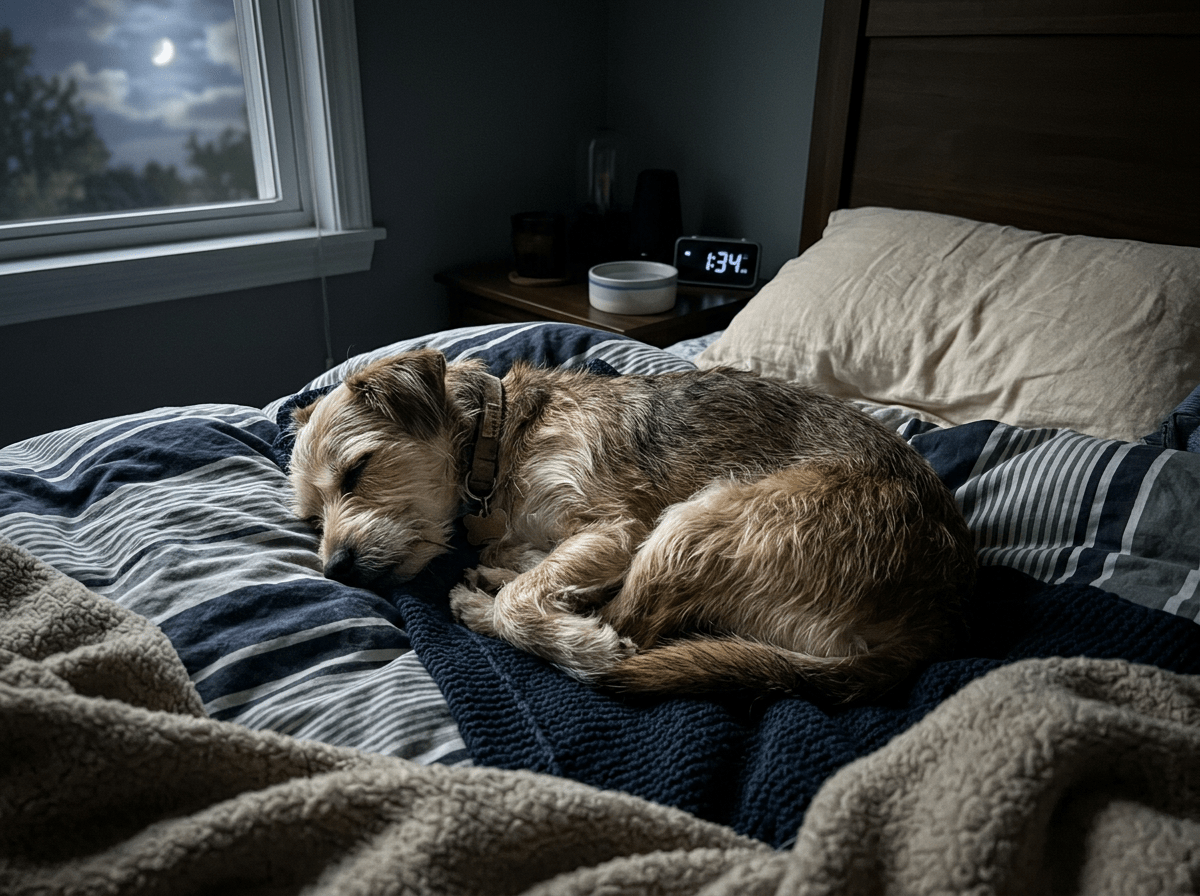
The narrative of animal rescue is frequently curated through a lens of human heroism—a savior reaching into a cold cage to offer a second chance to a creature without a voice. We are conditioned by social media to expect the “Freedom Ride” to conclude with a heartwarming montage of a dog curling up on a plush bed, sighing in relief, and instantly realizing they are home. However, the reality of that first night is often far removed from the cinematic “love at first sight” we are sold. It is messy, exhausting, and filled with a specific brand of anxiety that new “pawrents” rarely discuss openly.
When I first saw Sauli’s picture, I viewed myself through that hero lens, thinking I could simply “save” her. I didn’t realize then that the first night would be less of a quiet bonding experience and more of a “Hotel Tornado”. For many rescue dogs, the first night isn’t about gratitude; it is about survival intelligence and sensory overload.
The Sensory Storm of Disorientation
To a rescue dog, your home does not initially represent safety; it represents a vacuum of the familiar. Every scent—the laundry detergent, the floor cleaner, the lingering aroma of your dinner—is a new data point that must be analyzed for potential threat. On that first night in Wisconsin, Sauli was not a grateful recipient of my care; she was a force of nature. The environment was a whirlwind of shredded pillows and escape attempts through hotel windows.
This disorientation manifests in behaviors that can be deeply discouraging to a new owner. There is the pacing—the rhythmic click-clack of nails on hardwood that continues long into the 3:00 AM hour. There is the panting, a physiological sign of a cortisol spike that no amount of soothing whispers seems to de-escalate. In Sauli’s case, it was a midnight attempt to navigate the lock of a hotel door, her tiny paws scratching at the mechanism in a desperate bid for the familiar outdoors. We often projecting “loyalty” onto dogs, but on night one, loyalty is an unearned luxury. Trust is built in millimeters, and the first night is often spent at kilometer zero.
The Human Toll: The “What Have I Done?” Moment
There is a quiet, shameful thought that often creeps into the minds of new adopters during the first night: I have made a terrible mistake. This occurs when the “Hotel Tornado” is in full swing, and you are staring at a shredded rug or a puddle on the floor while the dog stares at you with wary, intelligent eyes that don’t yet see you as a friend.
The exhaustion is not merely physical; it is emotional. You have prepared for weeks, buying the best kibble and the softest toys, only to realize that the living being in front of you is a “miniature agent of chaos”. During that first weekend, I spent my time alternating between trying to contain the whirlwind and watching in bewildered amusement, wondering if I had bitten off more than I could chew. The first night is the death of the fantasy and the birth of the reality. It is the moment you realize that the “rescue” is a mutual contract: you provide the roof and the name, but they provide the hard-won realization that you are not a savior, but a partner.
The Decompression Period and the 3-3-3 Rule
Professional trainers often refer to the “3-3-3 rule”—three days of decompression, three weeks of learning routines, and three months of feeling truly at home. The first night falls into that initial three-day window where the dog’s brain is essentially in a state of high alert. They are not “being bad” when they destroy a pillow; they are expressing a level of anxiety that has no other outlet.
In the chaos of those early days with Sauli, the dynamic only began to shift when I stopped trying to force a connection and started respecting her space. The first night often requires the human to be a calm, boring anchor rather than an enthusiastic cheerleader. It requires accepting that the dog may not eat, may not sleep, and may spend the entire night huddled behind a couch or testing the strength of their crate.
The Slow Bloom of Trust
Despite the “Hotel Tornado” and the midnight escape attempts, something subtle happens in the quiet hours of that first night. After hours of mischief and pacing, there is often a moment where the adrenaline fades. For Sauli, it was finally resting her head on my lap after a weekend of mischief. It wasn’t because I had “saved” her, but because we had survived the storm of the transition together.
The first night is rarely beautiful, but it is necessary. It is the grit that makes the eventual bond so deep. Because rescue dogs have known loss, their loyalty is not a given; it is a hard-won treasure. When they finally decide, against their previous experience, that your home is safe, the victory is monumental.
Ultimately, we talk about the first night as a hurdle, but it is actually a foundation. It moves us from a life of sterile order to one of beautiful, chaotic meaning. Looking back at the “Hotel Tornado,” I realize that Sauli wasn’t just a scared pup; she was a confident companion waiting to be discovered through the mess. The first night nobody talks about is the one where you stop being a hero and start being a pawrent.

