What technology would you be better off without, why?
The Technology That Silently Steals Bonding Time
For many pet owners, the automatic pet feeder seems like a lifesaver. It feeds your furry friends on schedule, whether you’re busy, running late, or even out of town. But beneath this convenience lies an overlooked cost—our connection with our pets. If we consider the true impact of this technology, it might be time to rethink its place in our lives.
Convenience vs. Connection
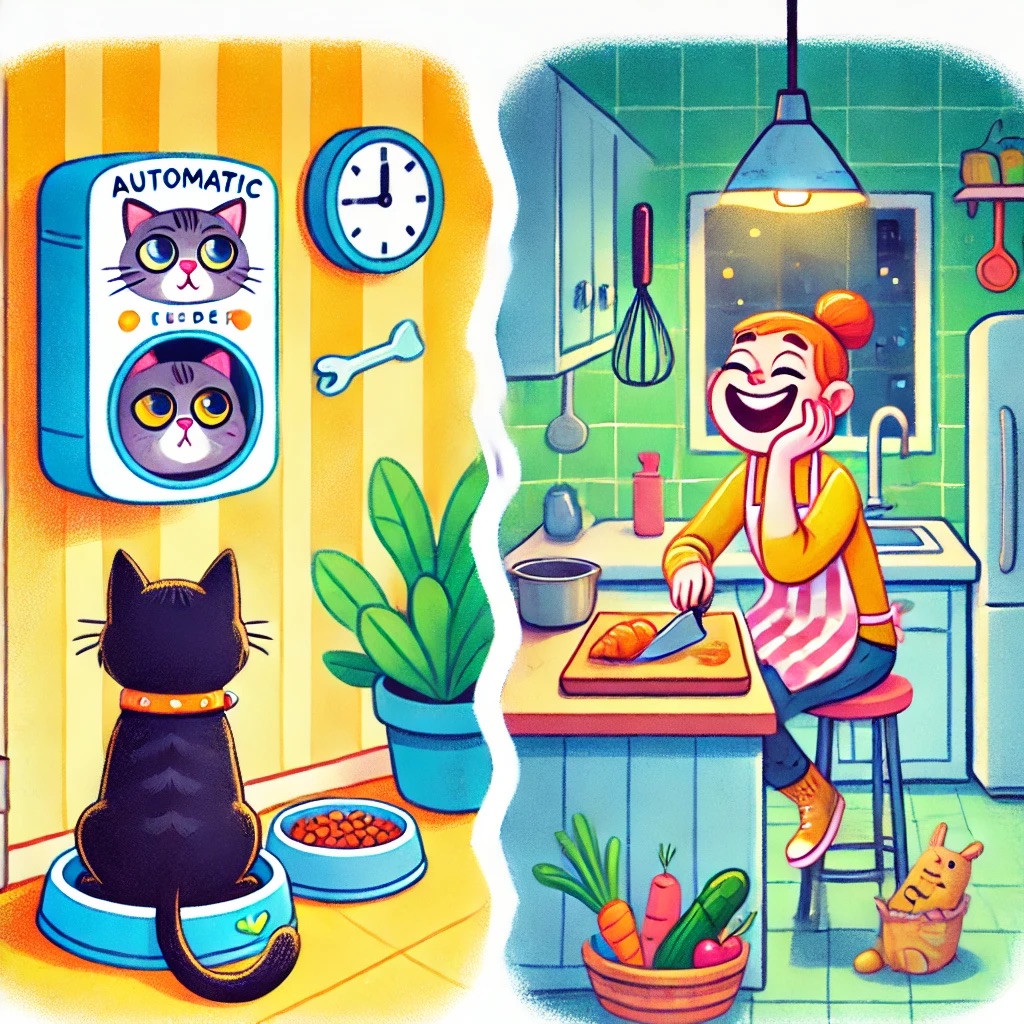
Automatic feeders promise a solution to a common problem: ensuring your pet is fed on time, no matter your schedule. While that sounds great, it inadvertently removes one of the most personal and bonding rituals of pet ownership—feeding time.
Feeding your pet isn’t just about food; it’s a moment of interaction and care. It’s the tail wagging as you scoop the kibble, the excited meows as the bowl is placed down, the quiet acknowledgment that this act strengthens your bond. Handing that moment over to a machine makes the relationship feel… less personal.
The Magic of a Home-Cooked Meal
Imagine skipping the kibble for a day and preparing a home-cooked meal for your pet instead. The simple act of chopping carrots for your rabbit, cooking rice and vegetables for your dog, or poaching fish for your cat isn’t just a culinary effort—it’s a declaration of love. Pets may not understand the specifics of your effort, but they recognize when they’re getting something special, just for them.
Preparing fresh meals also allows you to take control of their diet, ensuring they’re getting the healthiest ingredients and avoiding artificial fillers. It’s not just about better nutrition; it’s about creating a sensory experience for your pet—a new texture, a different smell, a little extra love in every bite.
The time you spend making that meal becomes a reflection of the bond you share. Watching your pet devour it with joy is far more rewarding than simply refilling a machine.
Let’s Leave the Automatic Pet Feeder Behind:
Relying on automation for pet care can unintentionally create distance. What starts with an automatic feeder could extend to automated litter boxes, robotic toys, or self-cleaning aquariums. Before you know it, you’re outsourcing all the little moments that build trust and companionship.
Pets thrive on routine and attention, and their behavior reflects the quality of the time we spend with them. The act of feeding, though small, can be a cornerstone of their day. Replacing it with an unfeeling machine risks turning pets into houseplants—something to maintain, rather than a living being to nurture.
What Happens Without the Feeder?
If we were to leave the automatic feeder behind, what would change? For one, we’d regain the joy of being present in our pets’ daily lives. Feeding time becomes an opportunity to observe their health, mood, and preferences. You notice the little quirks—like how your cat insists on eating from one side of the bowl or how your dog does a little dance before every meal.
More importantly, feeding becomes a reminder of the commitment you made when you brought that pet into your home. It’s a ritual that says, “I see you. I care for you.” No machine, no matter how advanced, can replicate that.
A Lesson in Responsibility
Abandoning the automatic feeder isn’t just about pets; it’s about ourselves. It’s a chance to embrace responsibility and presence in our lives. Pets offer us companionship, loyalty, and unconditional love—what they ask in return is a fraction of our time and attention.
In an age where convenience is king, it’s worth questioning the technologies we adopt. While automatic feeders are undeniably useful in emergencies, relying on them daily might rob us of one of the simplest joys of pet ownership: the connection that comes from showing up, bowl in hand, ready to care.
So tomorrow, when it’s feeding time, skip the automatic dispenser. Maybe even cook something special. Fill the bowl yourself, watch your pet’s excitement, and let that small moment remind you why they’re worth the effort. The wagging tails, purring cuddles, and grateful gazes are far better rewards than any convenience a gadget can offer.
 Let Your Pawrenting Journey Begin